
Target users
C-suite
Decision makers in SMBs
Governments
Competitors
L1
WeAreGroup
Cosee
Clicker

👱🏻♂️
Age/ Gender
37/Male
Location
Köln, Germany
📍
Jonas Weber
Occupation
CEO
🕦
Just Got a 6 million $ funding and want to start with the product. He already has a rough idea of the product and want to finalise the design and development in 6 months
Jonas has work experience of almost 4 years as a operation head in a tech company and has started his new company. He wants the product to be launched ASAP
Bio
Build an MVP that solves a real user problem
Test the product in real market conditions.
Get early user feedback to iterate quickly
Ensure everyone is aligned toward the launch deadline
Goals
Motivations
Prove himself as founder
Financial success
Desire for independence
Name and fame
Boost Investor confidence
Pains
Compliance & data protection worries.
Finding the right agency in short time
Paperworks/Contract
Delays
Low budget
Fear of competitors beating him to market.
Highly execution-driven
Comfortable with processes and KPIs.
Risk-taker now, after years of corporate structure.
Prefers practical solutions over perfect ones.
Behavior traits

👱🏻♂️
Age/ Gender
48/Male
Location
Dubai, UAE
📍
Salim Aizaz
Occupation
Product director, SMB
🕦
Companys tech team is currently does’nt have time to work on a new project as they are occupied with existing projects. So, they want to hire a agency who can deliver product with great design and functionality and on time
Aizaz is the product director, want to convert the idea into a product. He is well aware of the different stages of design and development. He has successfully delivered multiple B2B products.
Bio
Convert the idea into a market-ready product
Find a reliable, skilled agency that can execute with minimal handholding
Maintain high standards of UX/UI design.
Ensure the product is scalable, stable, and user-friendly.
Goals
Motivations
Reduced stress for team
Timely product launch
Partnership for future
Career with less resource
Revenue potential
Pains
Wants clear roadmaps, timelines, and deliverables
Concern about agency reliability
Communication gaps between internal product vision and external delivery
Fear of budget overruns or misaligned expectations.
Detail-oriented
Balances speed with quality
Collaborative, but expects accountability from partners
prefers agencies with proven track records
Behavior traits
User journey
Stages
Jonas Weber (CEO)
Salim Aizaz (Product Director)
Trigger
Research& consideration
Evaluation
Decision
Delivery and collaboration
Outcome/Gains
Just received the funding and want to start product development
Tech team overloaded, so can not give another project to the current team
Needs new agency/company to proceed with the new project
Searches for agencies , freelancers and companies that can deliver good MVP in 6 months
Prioritizes cost, timelines and faster delivery
Looks for companies with B2B expertise
strong UX/UI
Better communication
Process clarity
Worried about compliances, paper work and budget
Checks if the company has worked with any bigger clients
Worried about reliability and expectations
Needs clear roadmaps, milestones and accountability
Chooses companies who can deliver faster and commit to deadline
Chooses if company show structured process
Good past record with B2B track record
Expects fast progress, regular updates, planning.
Prefers practical solutions
Expects better design, scalability and quality assurance
MVP Launched faster
Investor confidence boosted
Reduced team stress
Timely launch
Heuristic analysis
Did analysis of all the existing pages but here I am showing just a few ones to keep it concise
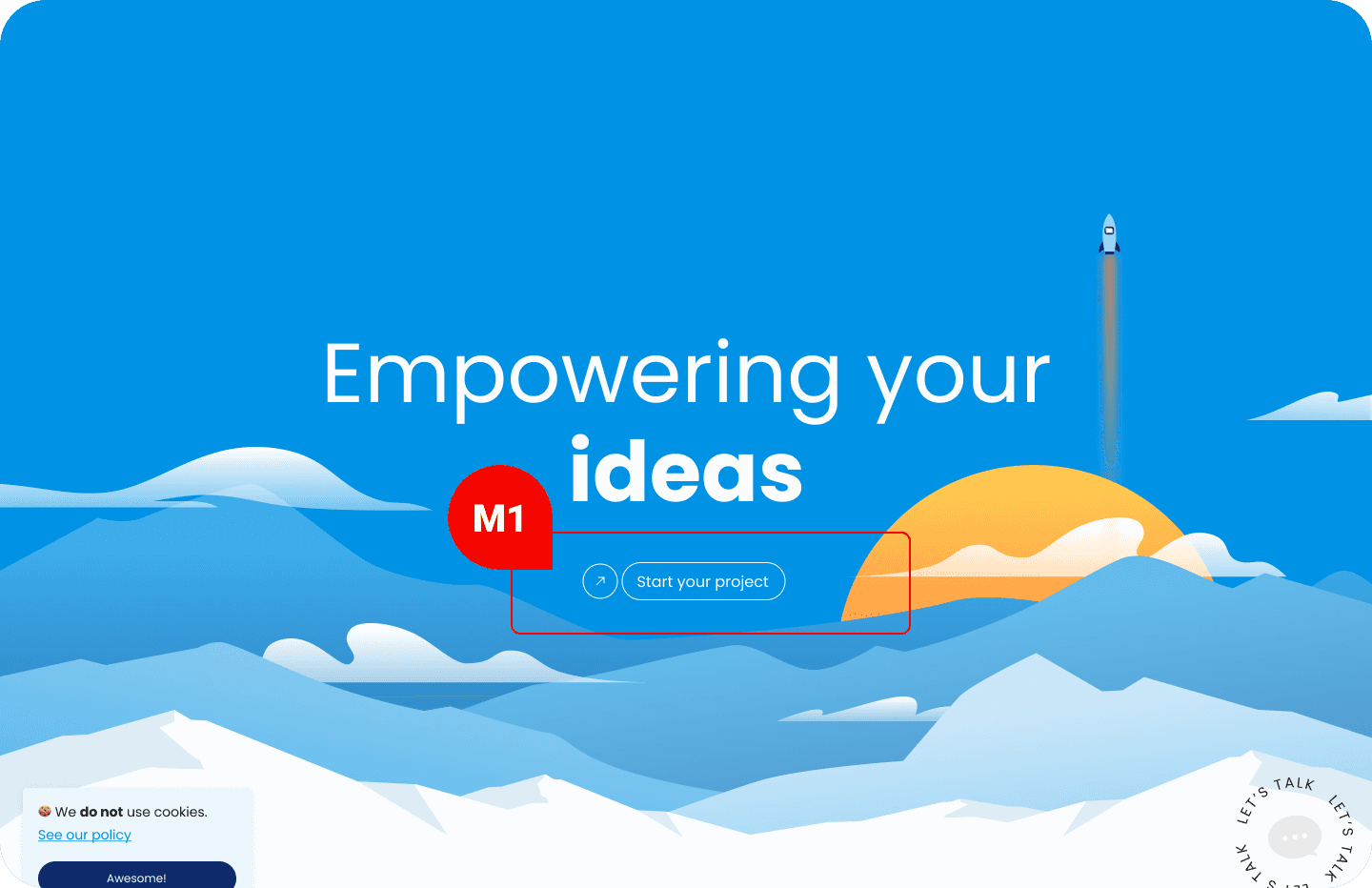
Clarity of CTA
The current CTA is not a primary CTA and upon hovering, it does not seem as though it is clickable.
Heuristics Violated
Match between the system and the real world
Consistency & standards
Design Violation
Contrast
Colors
Size
Recommendation: Replacing the current CTA with a more actionable filled CTA and possibly changing the micro interaction associated with it upon hover
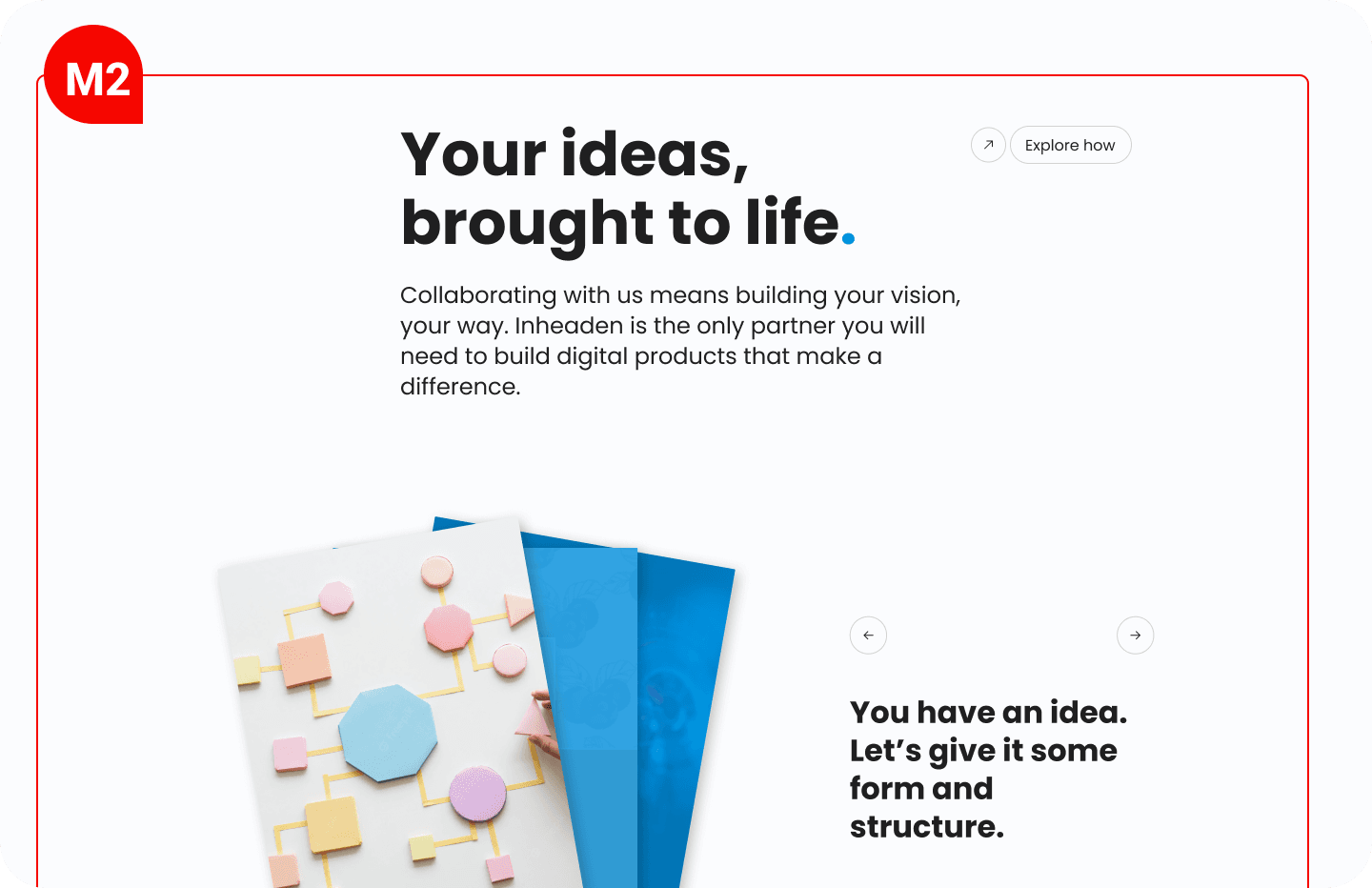
More Prominent “What We Do” Section
The messaging and imagery depicting the company's products or services lack clarity. Having arrows switch from one image to the other decreases user experience.
Heuristics Violated
Match between the system and the real world
Recommendation: Replace the current unclear copy with concise text or visual cards accompanied by a prominent call-to-action (CTA) button leading to a dedicated "About Us" section. Provide an image of the team to give a peak into what the culture at Inheaden is like.
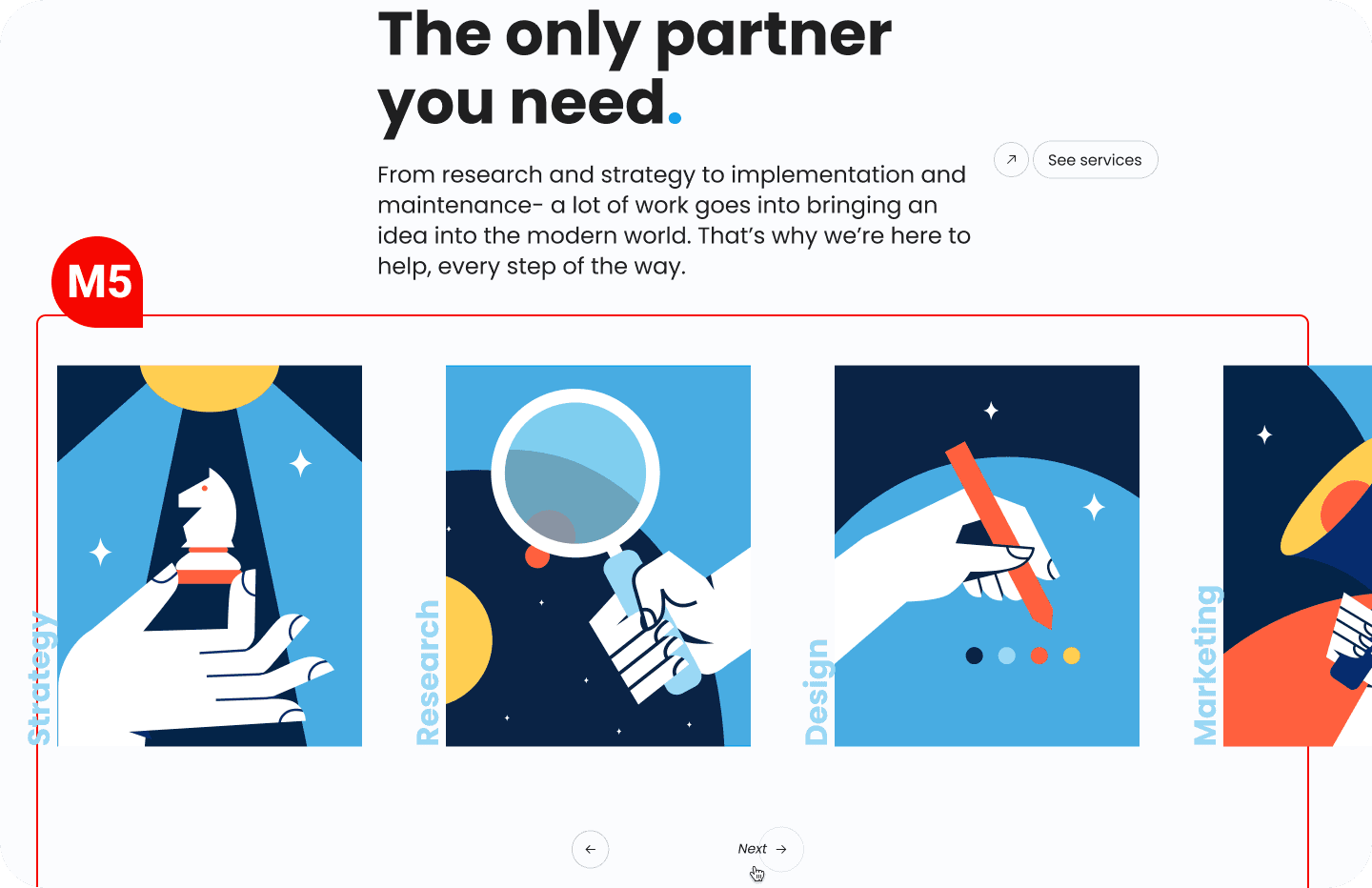
User Experience of the Services is weak
The services cards are on scroll, hence the user cannot have an overview of all the services at a single glance. The cards are not clickable. Additionally, there isn’t a glimpse of what to expect from each of these categories.
Heuristics Violated
Match between the system and the real world
Consistency & standards
Flexibility and efficiency of use
Recommendation: To display all the cards at one glance so that the user can see the overview of all the services. Additionally, to have more information for each of these categories so that the user can understand better about the services that the company offers.
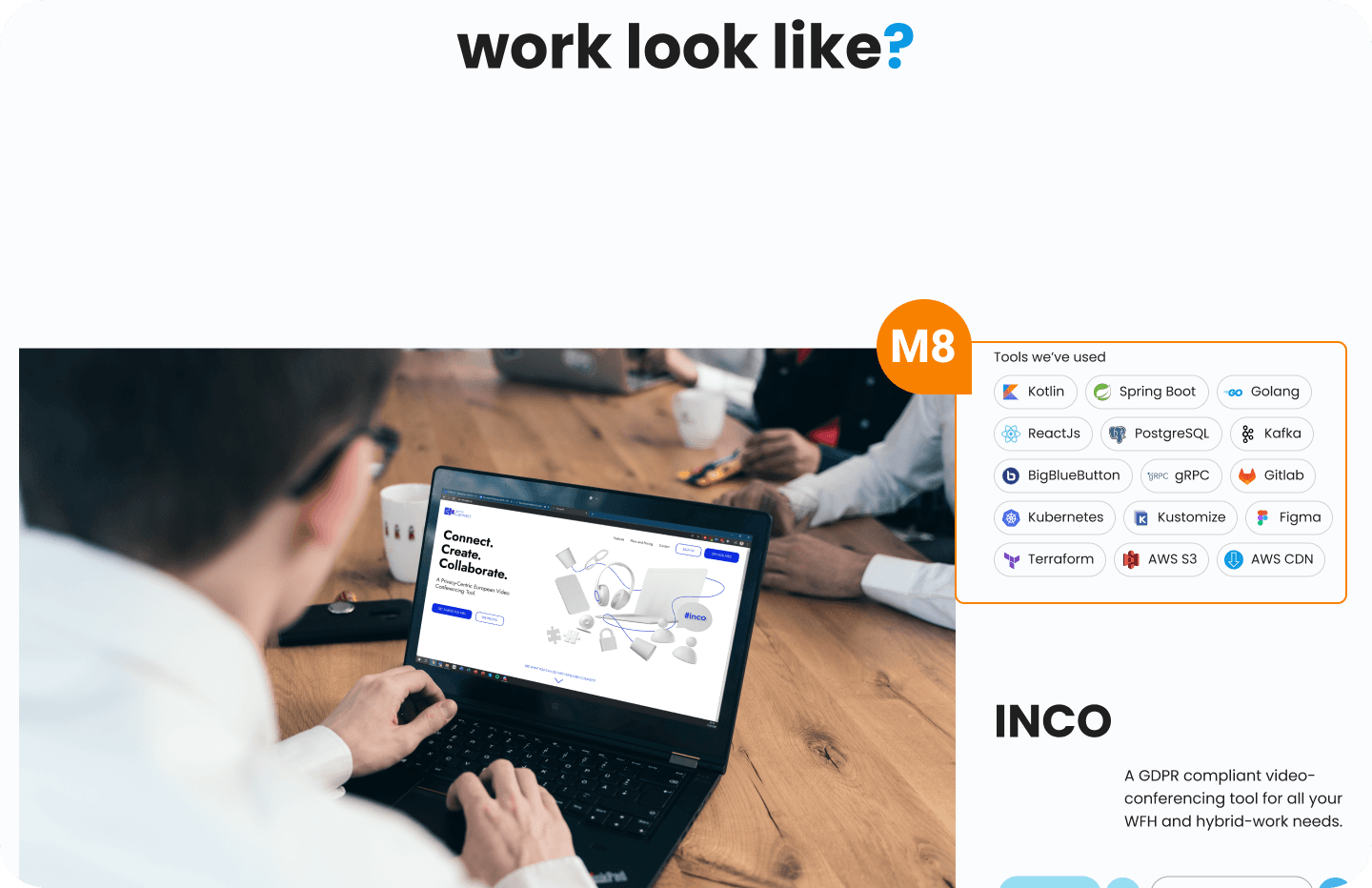
Tools seem irrelevant
Tools that have been used for a given project seem redundant on the homepage, and could rather fit in better within each project detail page. Additonally it increases the cognitive load for this section
Heuristics Violated
Aesthetic & Minimal Design
Recommendation: To give more emphasis on the Project description, along with tags such as Domain name, no. Of downloads etc.
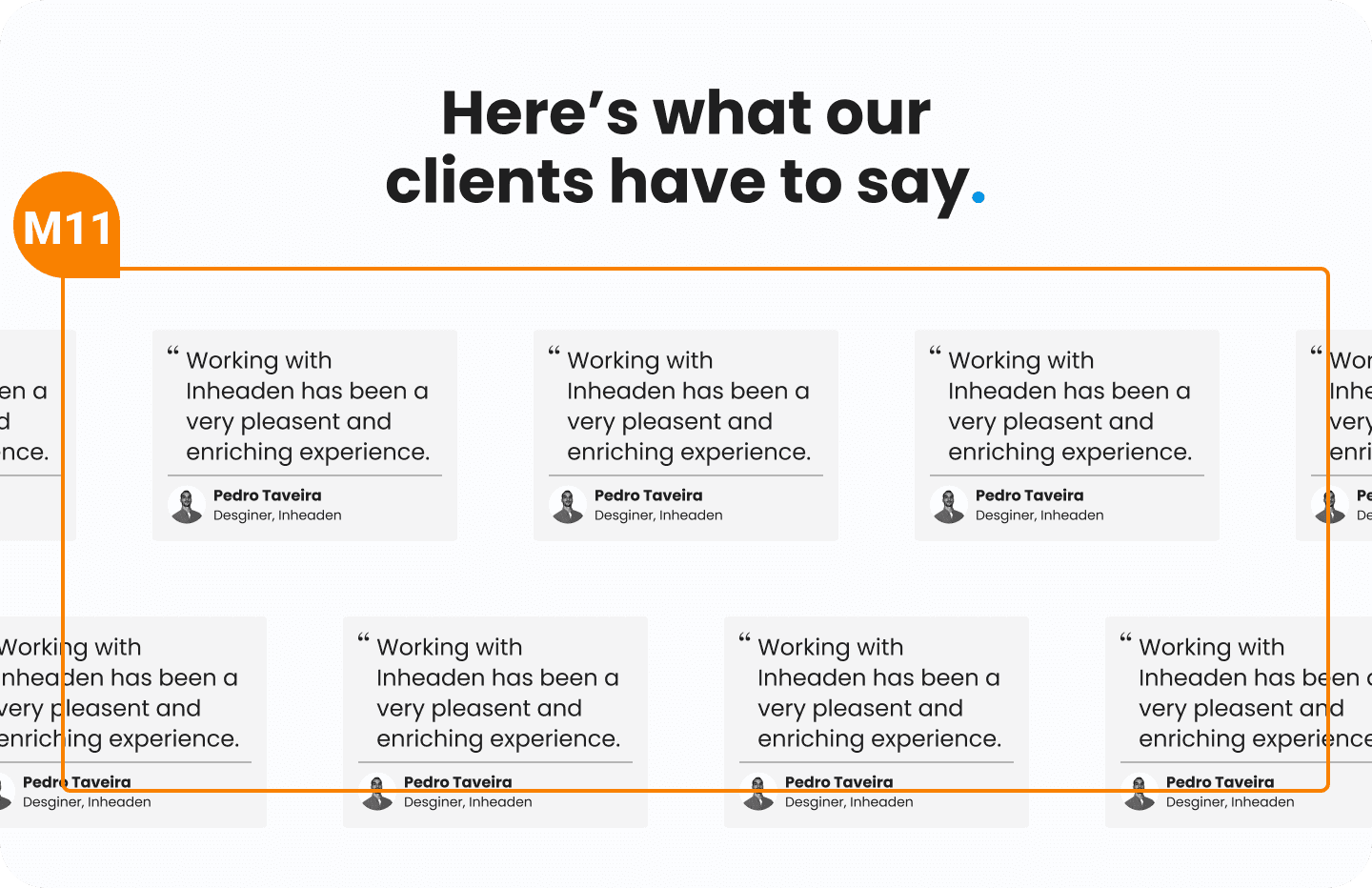
Testimonials could be represented better
Stacking multiple testimonials on a scroll may diminish their authenticity and credibility.This approach can overwhelm users and make it challenging for them to engage meaningfully with the testimonials, potentially detracting from their overall experience on the homepage.
Heuristics Violated
Consistency & standards
Aesthetic & Minimal Design
Design Violation
Space
Recommendation: Highlighting a single testimonial accompanied by the client's image can enhance credibility. Incorporating arrows for users to toggle between testimonials maintains engagement while providing a streamlined user experience.
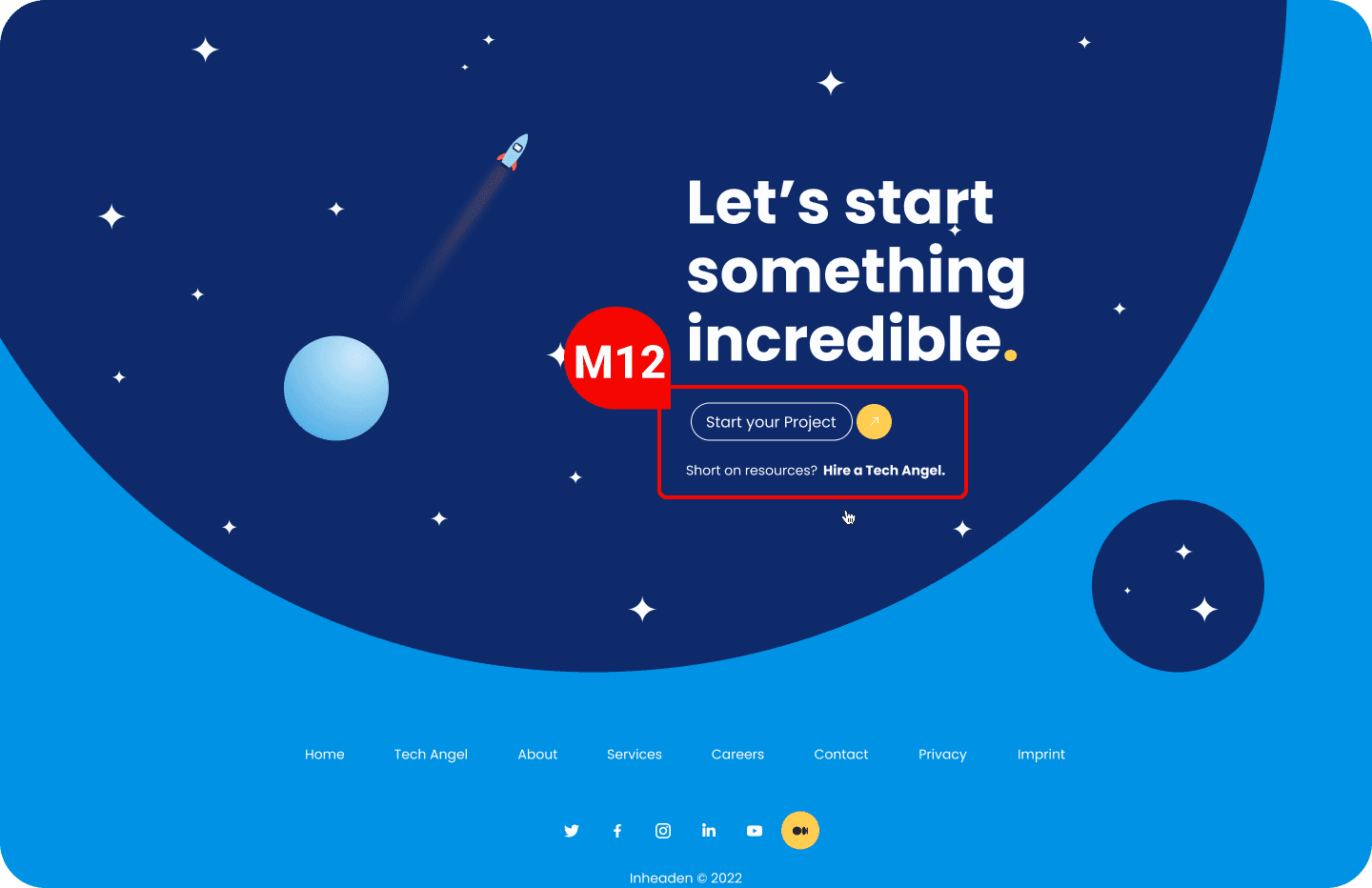
More Emphasis on the Lead Gen CTA
The Lead Gen CTA seems to be lost under the title , decreasing its visibility
Heuristics Violated
Consistency & standards
Design Violation
Space
Size
Colors
Recommendation: Create a more striking CTA through which the users are aware that it is clickable
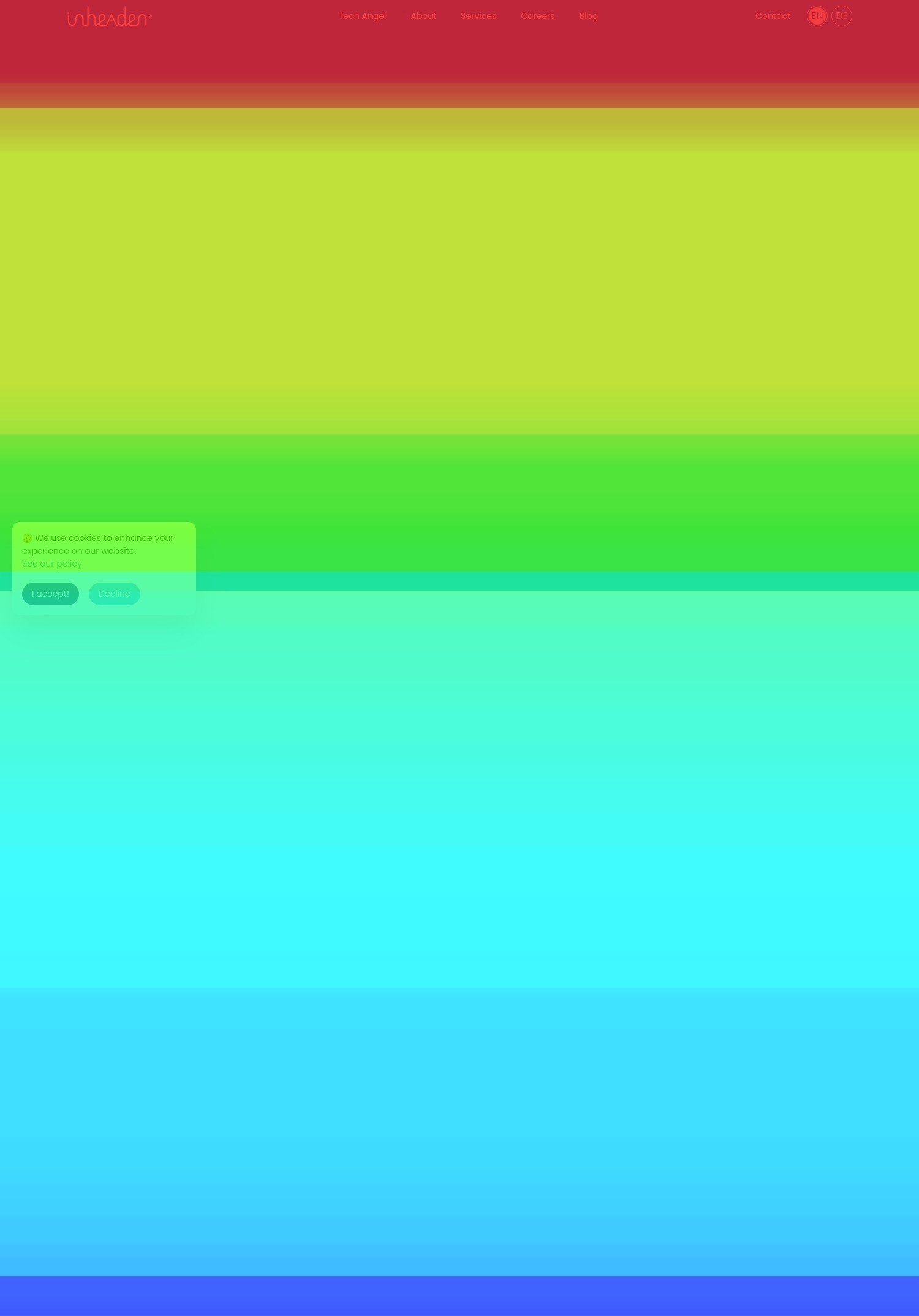
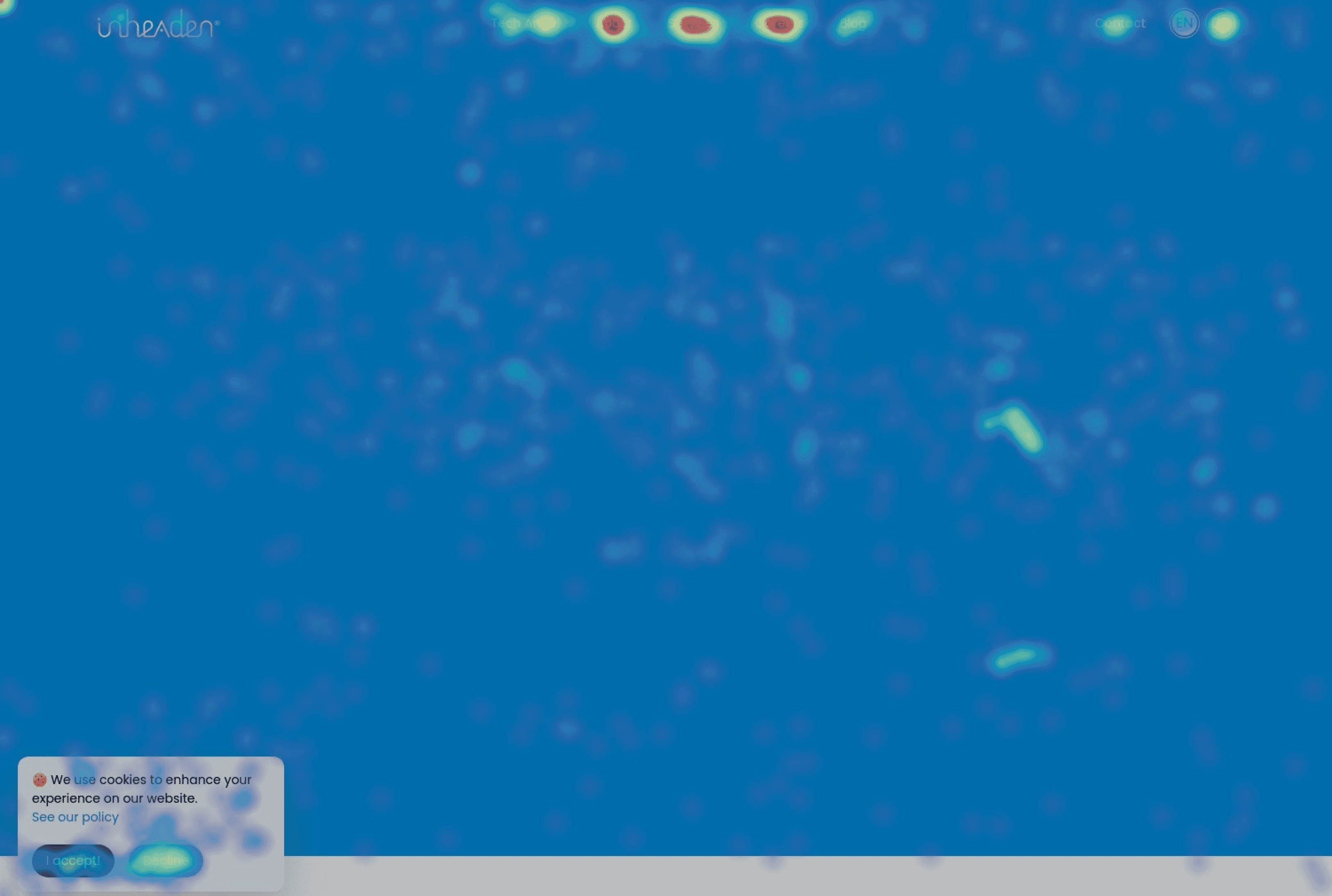
Clicks
Scroll
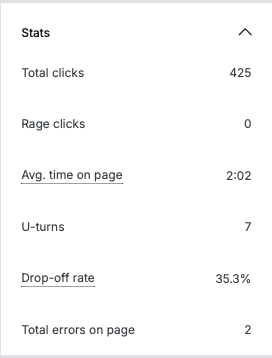
Stats
Move
No. of clicks & screen recordings suggested that users are getting confused with the language buttons
40% users returned without even seeing the first screen of homepage

7.53%
3%
5.88%
6%
1%
1.65%
8%
9.88%
32
13
25
26
4
7
34
42
29%
70%
94%
60%
43.7%
36%
Understanding User behaviours
We did Hotjar analysis in order to understand how user actually interacts with the interface
Key insights
Value Proposition failure
Users cannot understand what the company actually does within first 5 seconds
Impact
High bounce
Low trust
No decision path
Users were forced to explore instead of being guided
Impact
Cognitive overload
Drop offs
Weak Trust Layer
Case studies and proof were buried and not explained well and some CTAs were not functional
Impact
High hesitation
Low conversion
Misaligned content strategy
Focus on tools/features instead of outcomes
Impact
Users don't see business value
Experience strategy
Information heavy
Decision driven
Feature focused
Outcome focused
Static browsing
Guided experience
I shifted the website from an information-heavy experience to a decision-driven one by prioritizing clarity and reducing noise. The messaging moved from feature-focused to outcome-driven, highlighting business value, while the experience evolved into a guided journey that leads users from understanding to action through a structured flow and clear CTAs.
Conversion funnel design
I tried to map every section to a decision stage
Awareness
Hero (Clear value prop)
Understanding
Services simplified
Trust
Case studies
Consideration
Discovery section
Action
CTAs across journey
INHEADEN
Tieing design to insight
Since, the company wanted to retain the existing brand aesthetics. we directly made hi-fidelity UIs instead of working with wireframe, low or mid fidelity screens. It saved time.
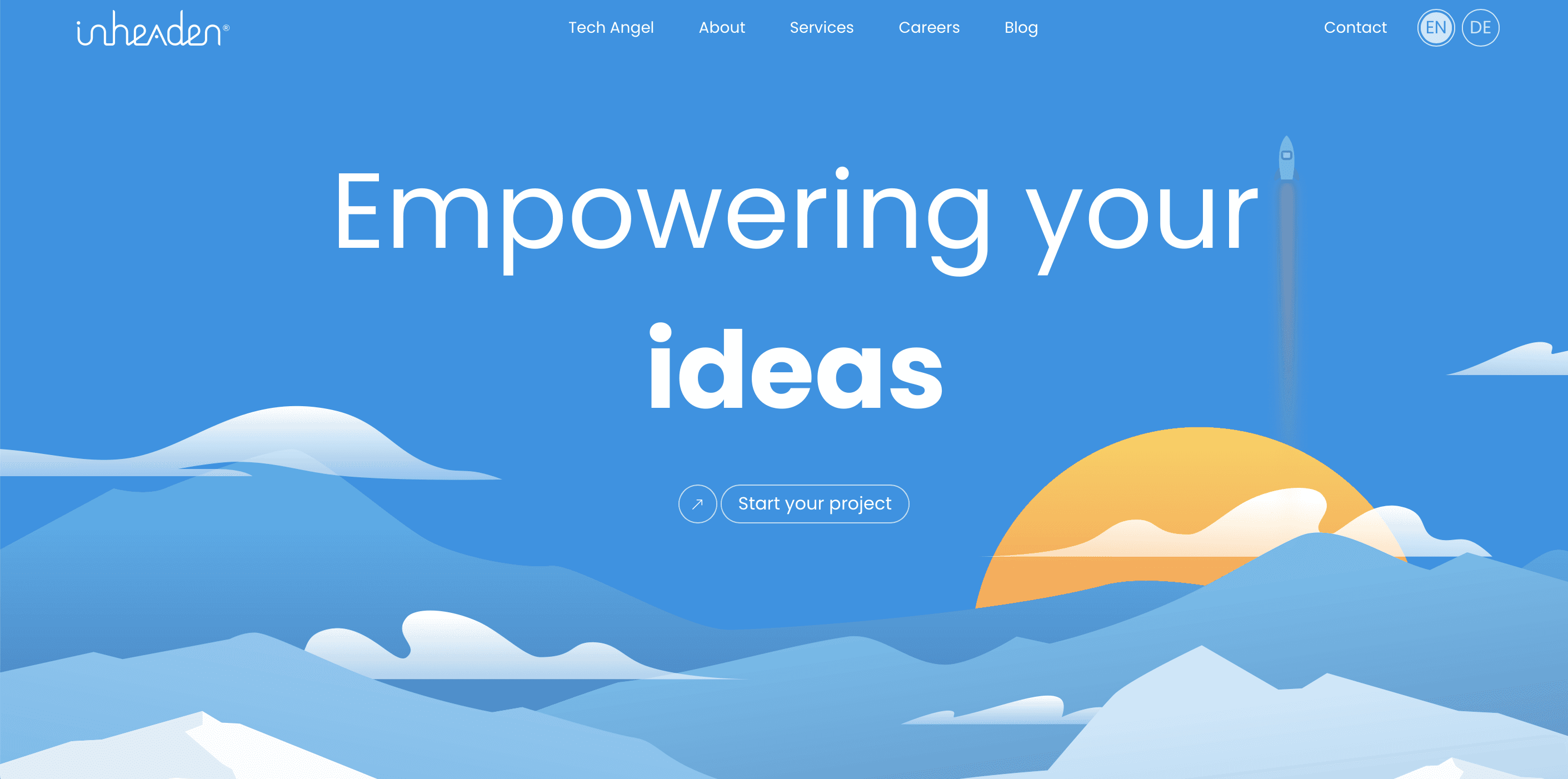
No clear USP & hero messaging
Introduced outcome driven message
Problem:
Users were not able to understand in first 5 seconds, what exactly the company does
Animation load time was too high (approx 3 second)
Solution:
Introduced straight forward text that is easy to understand & impactful
Impact:
Faster comprehension
Before
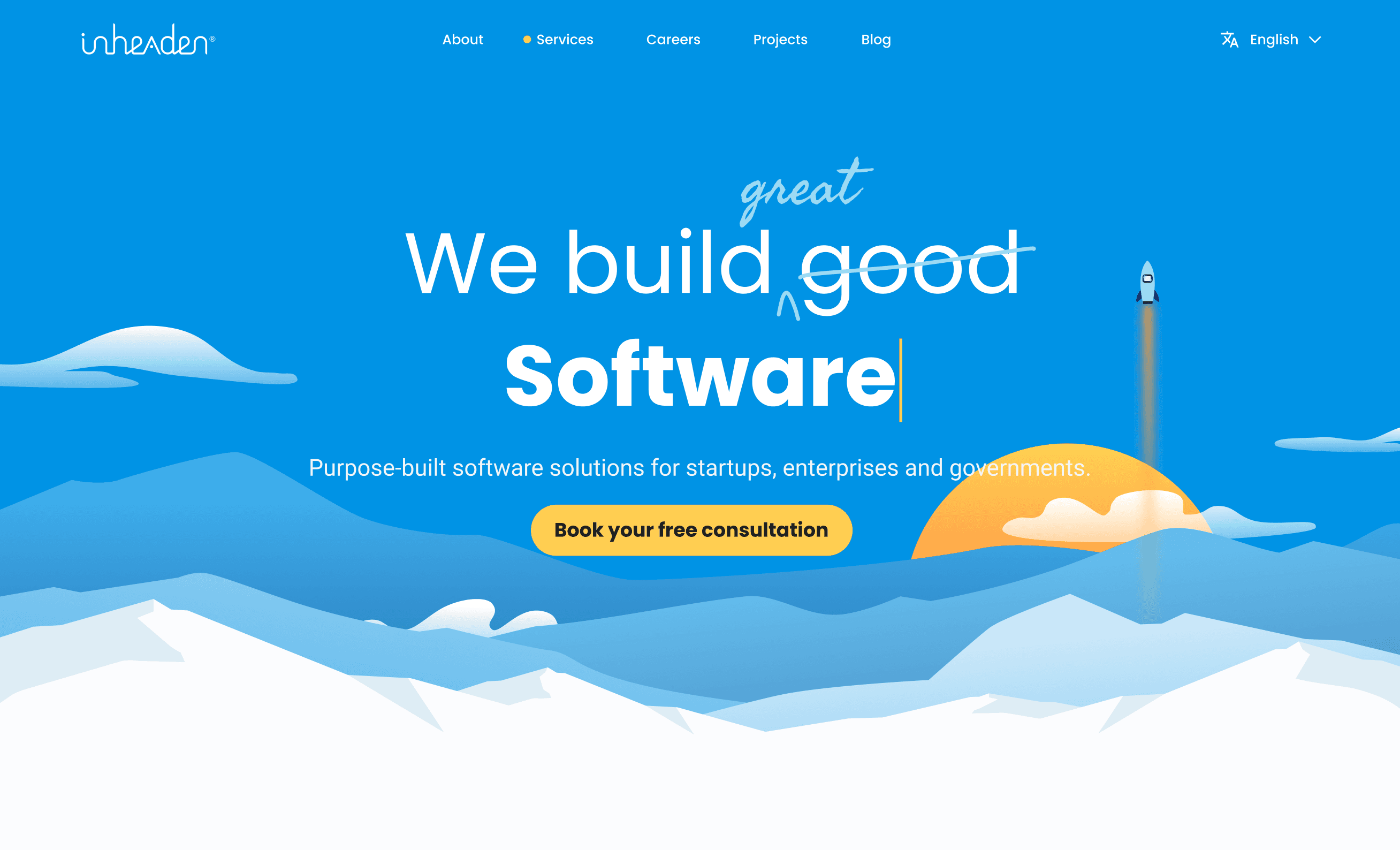
After
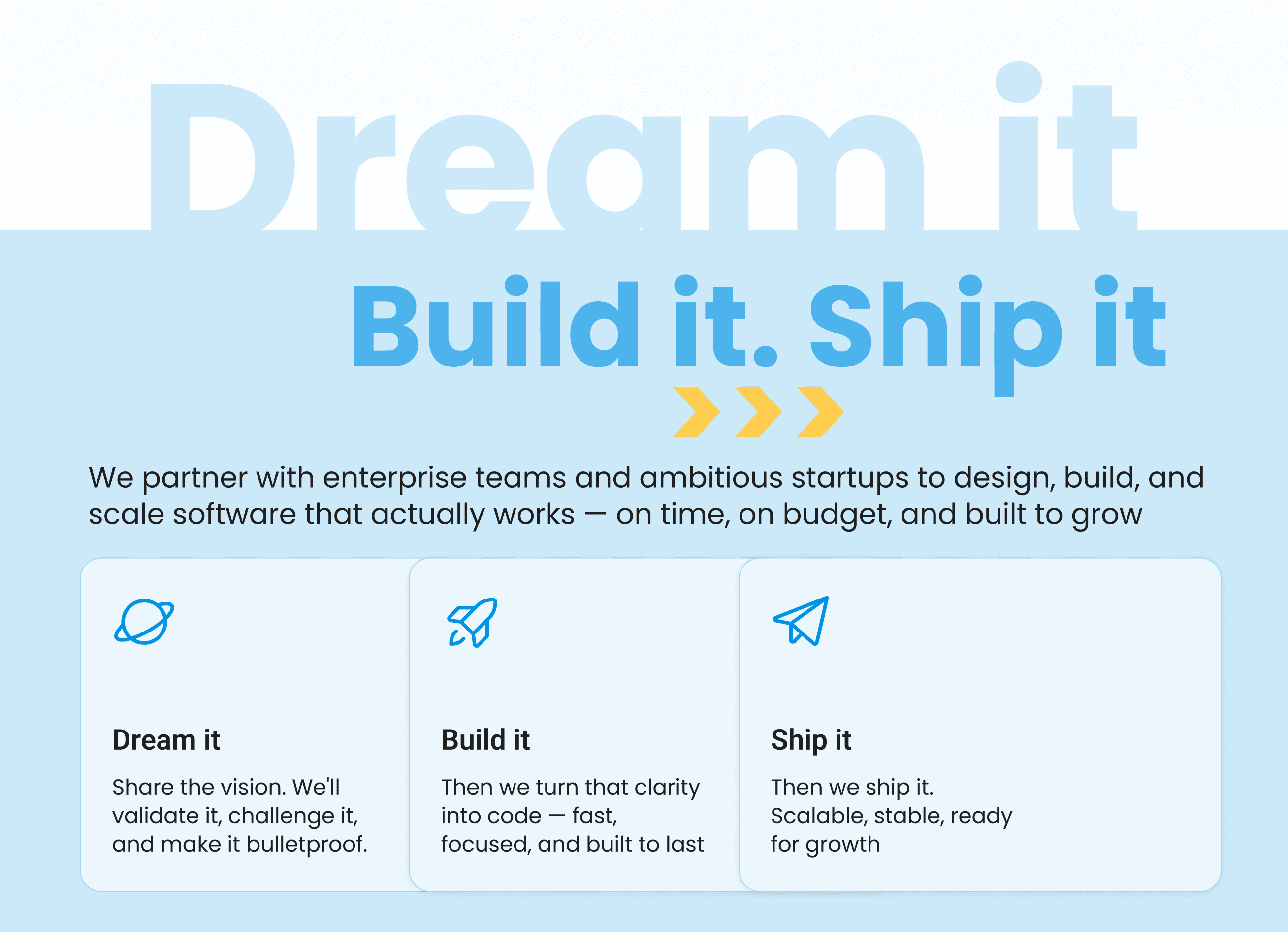
Section just after hero section
Users confused about services
Problem:
Services were not well explained
Friction and bad UI stopped users to see information about all the services
Solution:
Restructured the section:
3 cards at top (Most revenue generated by these)
3 cards at bottom (Company wishes to also focus on these for future revenue generation)
Impact:
Easier decision-making
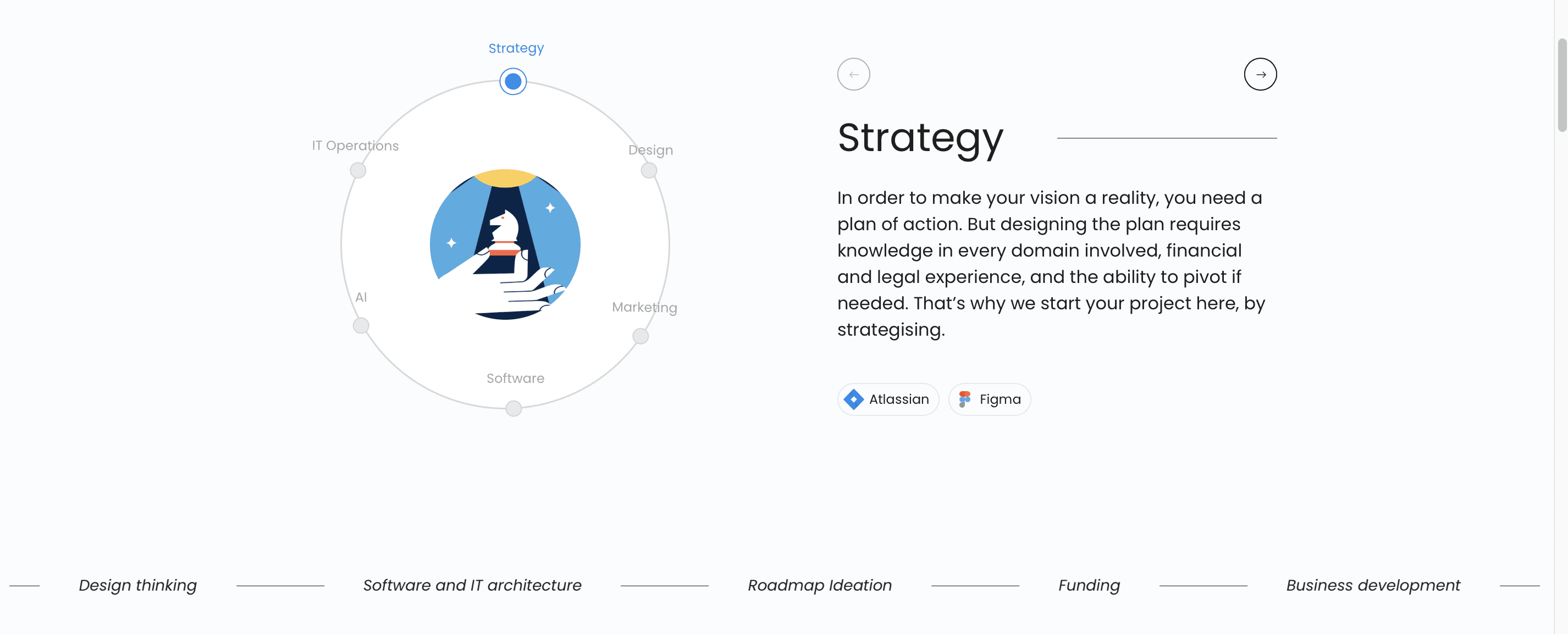
Before
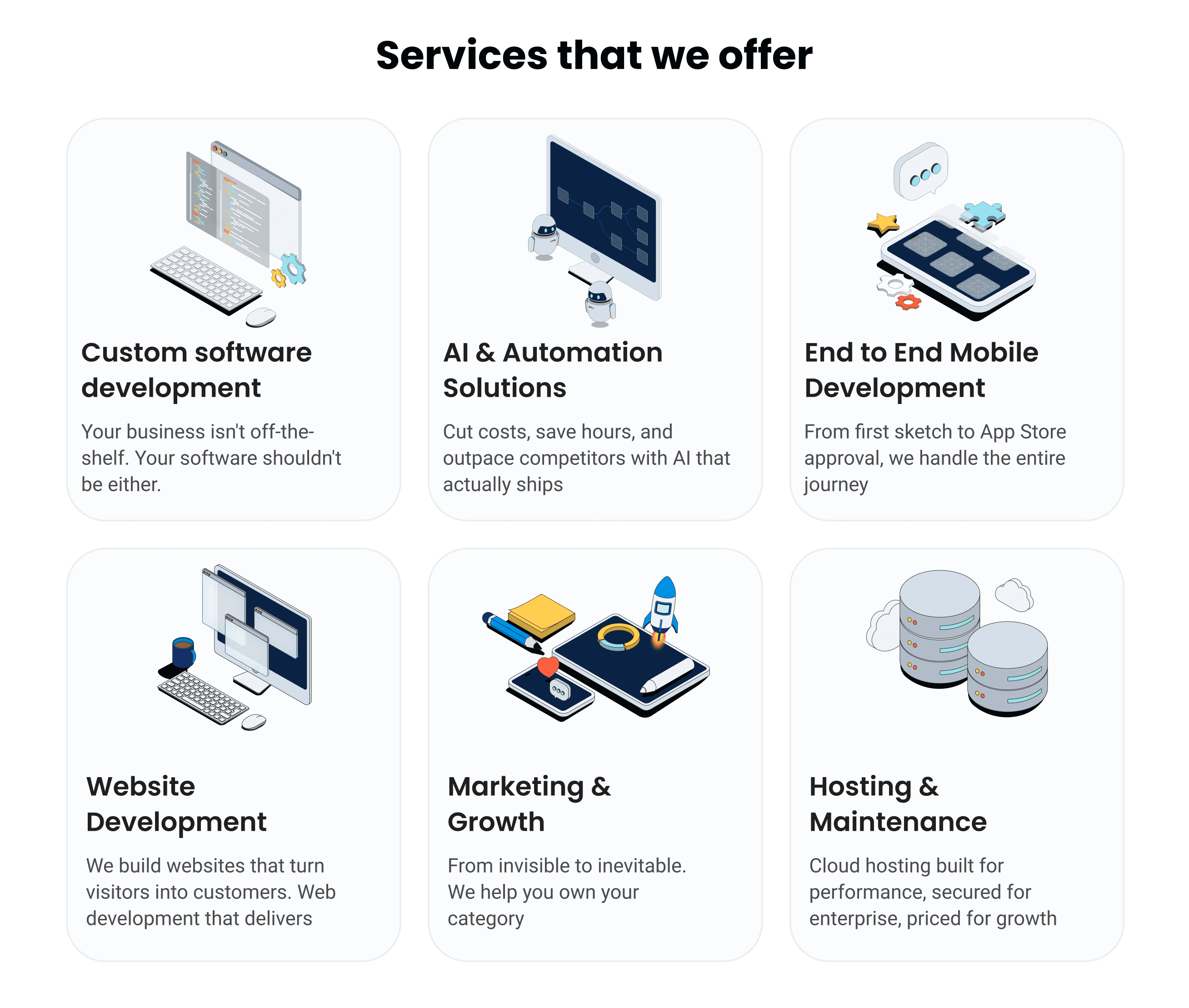
After
Low conversion
Problem:
No POC with client except main services & contact to gain trust before getting a contract
Solution:
Added "discovery calls" entry points across journey which is cheaper and has the potential to attract more clients
Impact:
Increased chances of getting a call
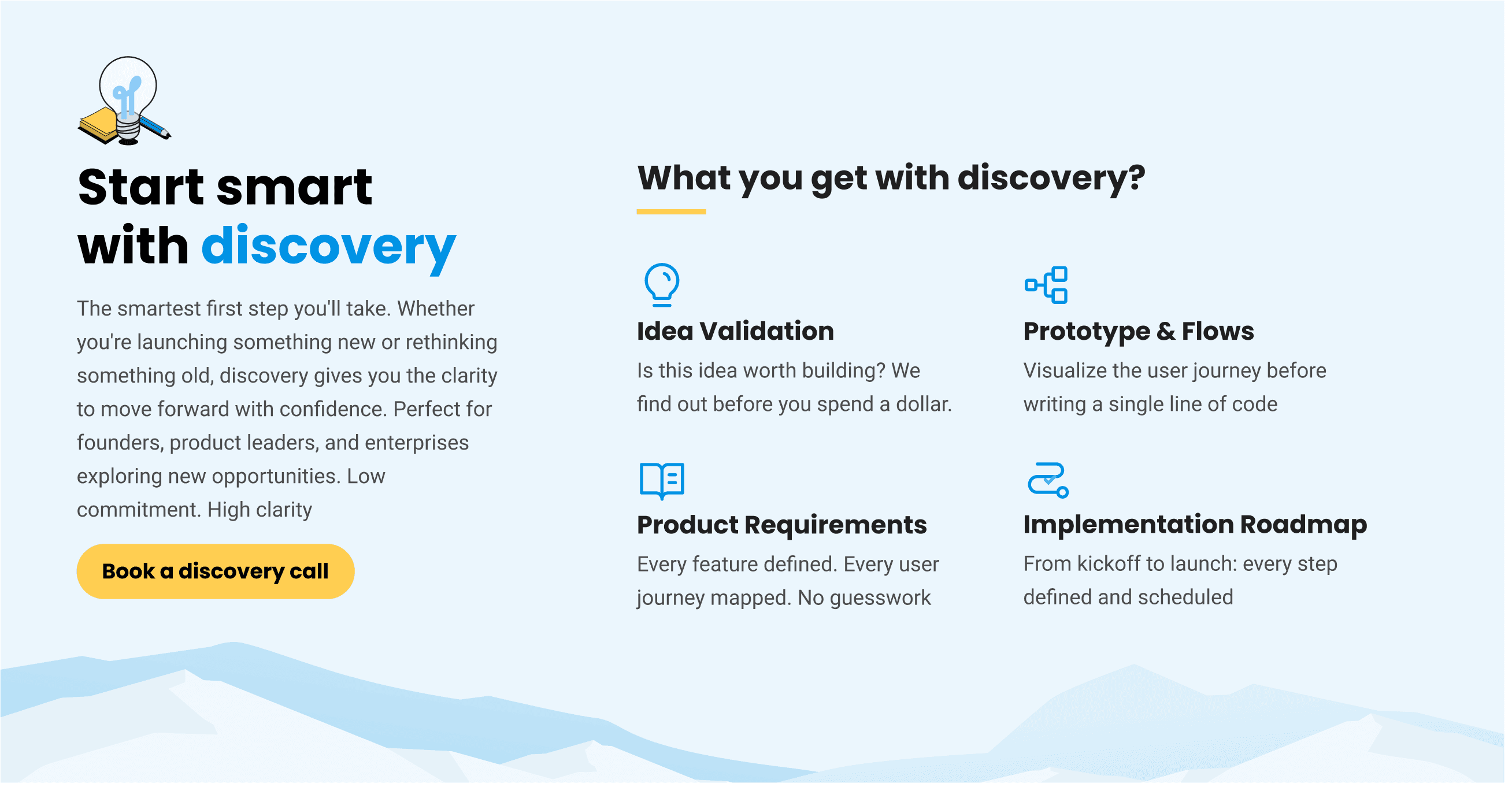
New section introduced
Unnecessary cognitive load + No project Impact
Problem:
Unstructured project information and similar UI of chips and CTA can create confusion
Generic text about project doesn't attract clients
Solution:
Added "discovery calls" entry points across journey which is cheaper and has the potential to attract more clients
Added impacts made by the products
Impact:
Increased confidence to clients
Decreased cognitive load
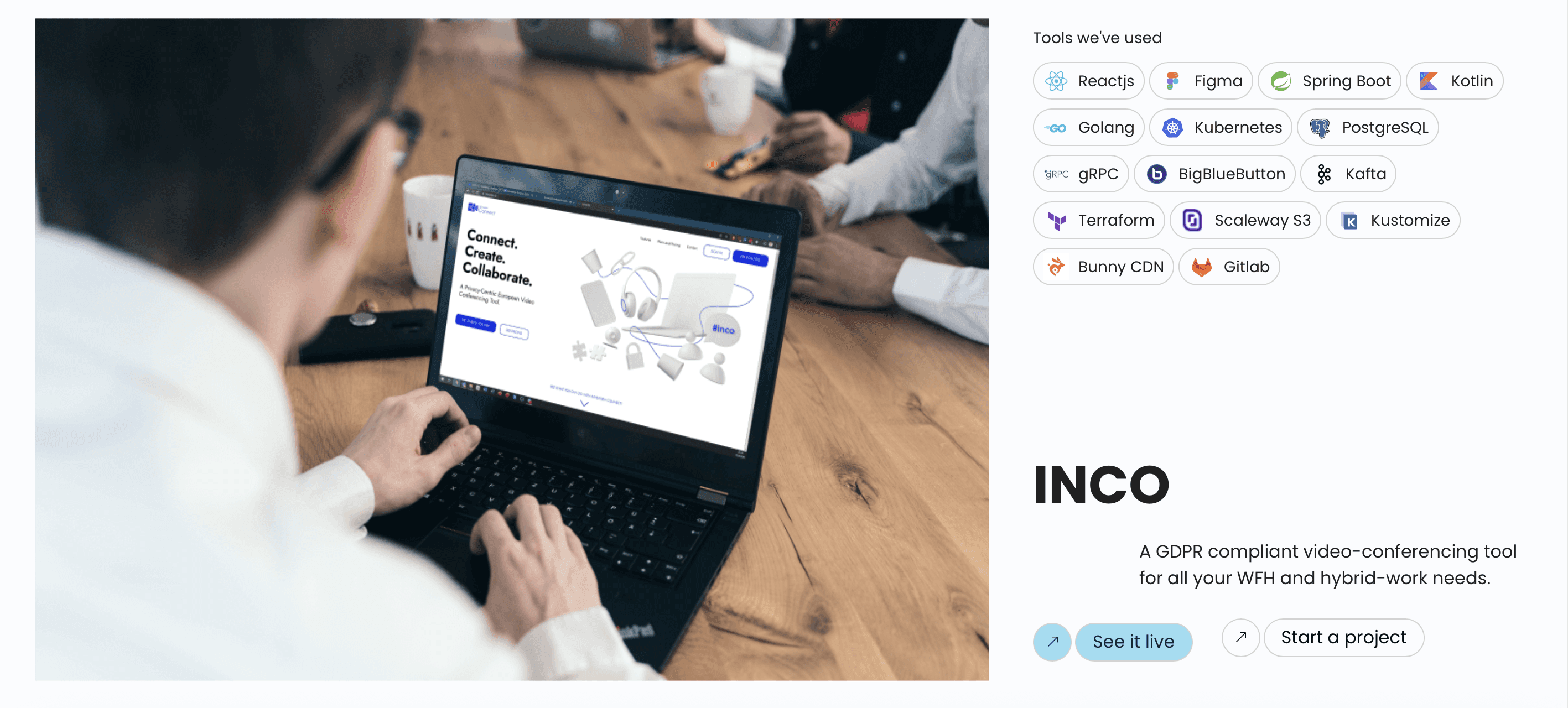
Before
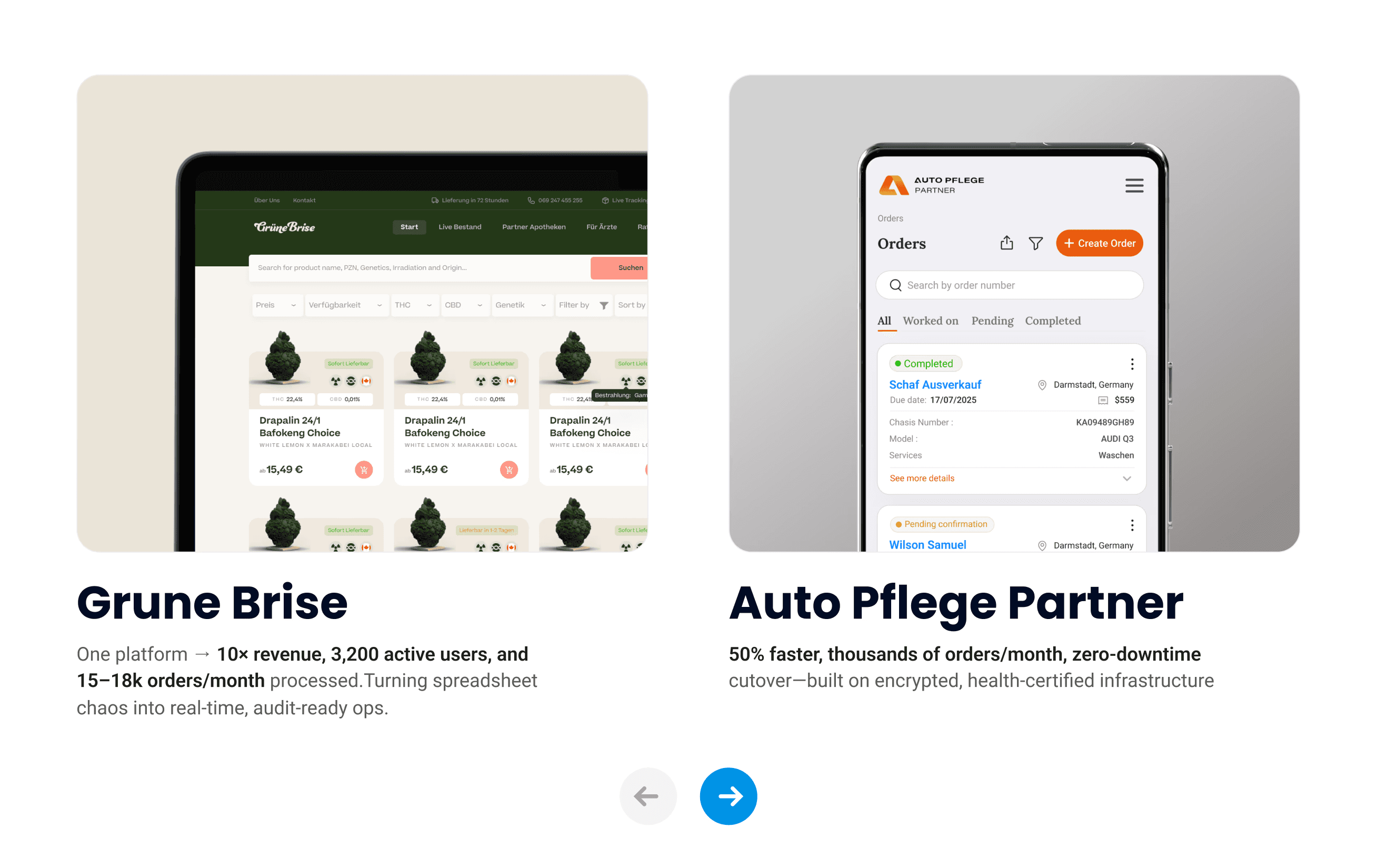
After
Low trust in users
Problem:
Testimonials didn't look genuine
Not aesthetically pleasing cards
Cards moving in two direction reduce readability
Solution:
Added genuine looking real testimonials that pleases eyes and are easy to read
Impact:
Increased trust
Much better readability
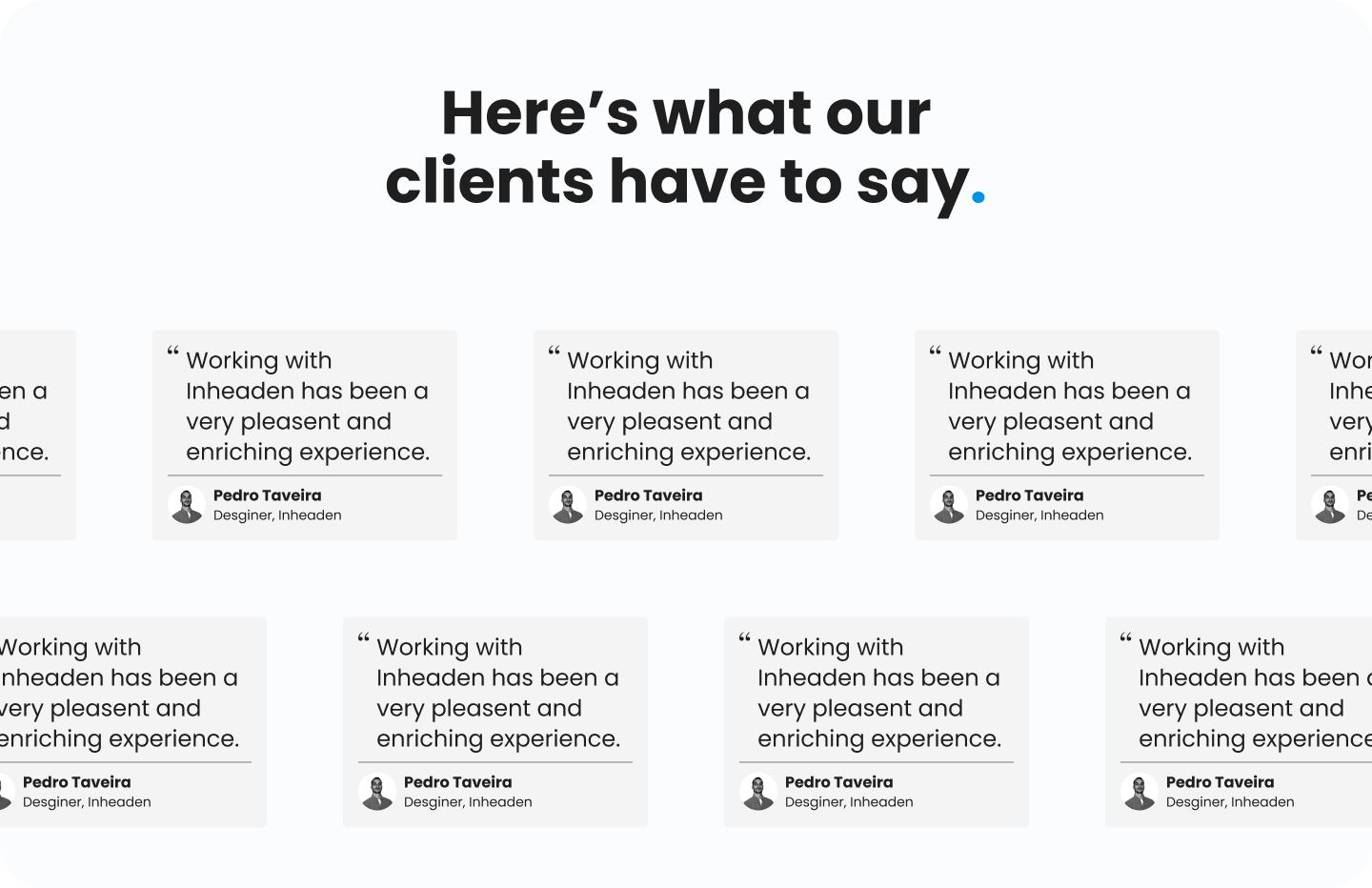
Before
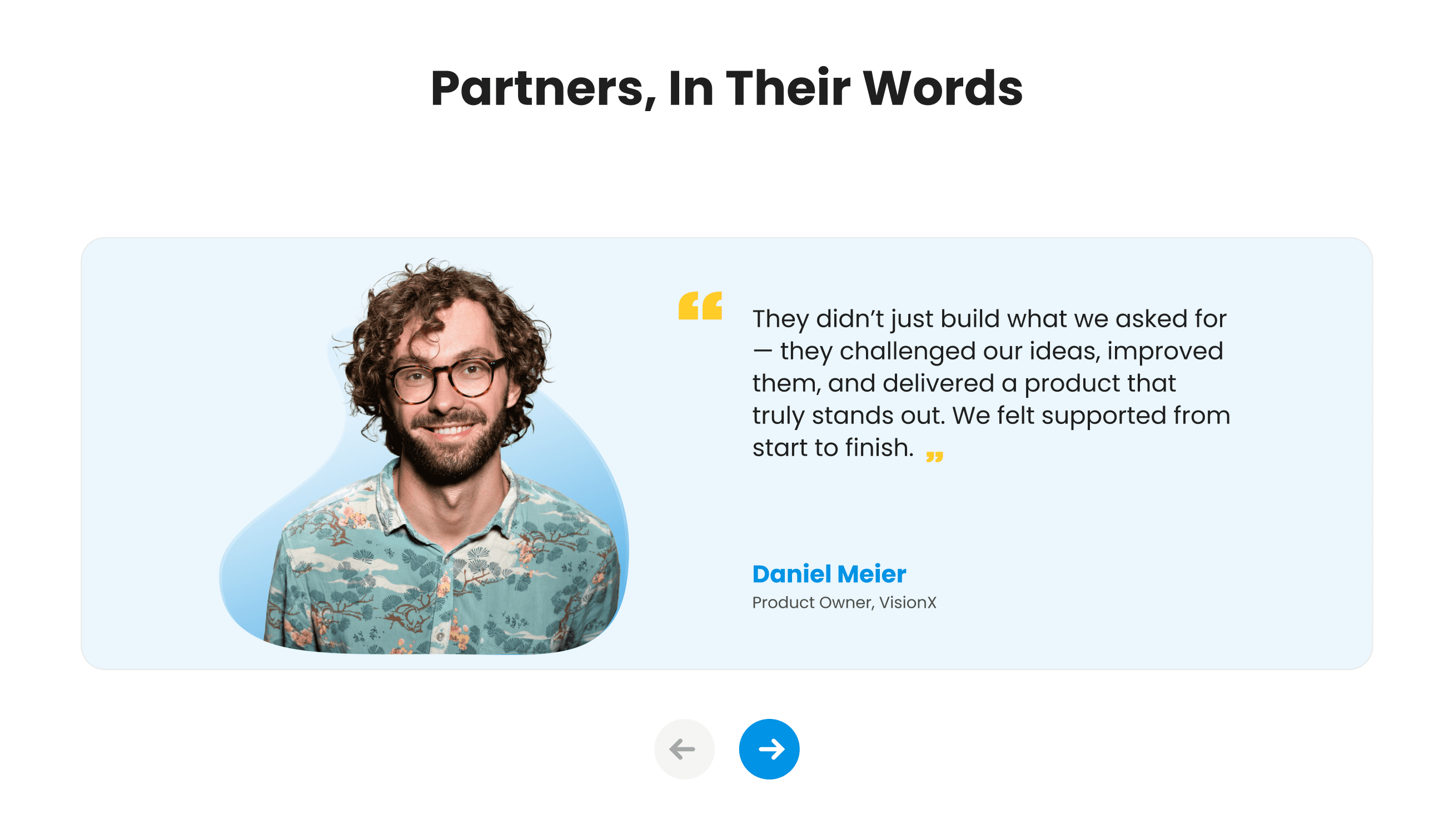
After
Cluttered footer
Problem:
Low confident text
Cognitive load increased because of so many elements mixed together in a haphazard way
Solution:
Well structured and more modern looking design thats easy to scan
Better copy
Impact:
Increased trust
Faster scan
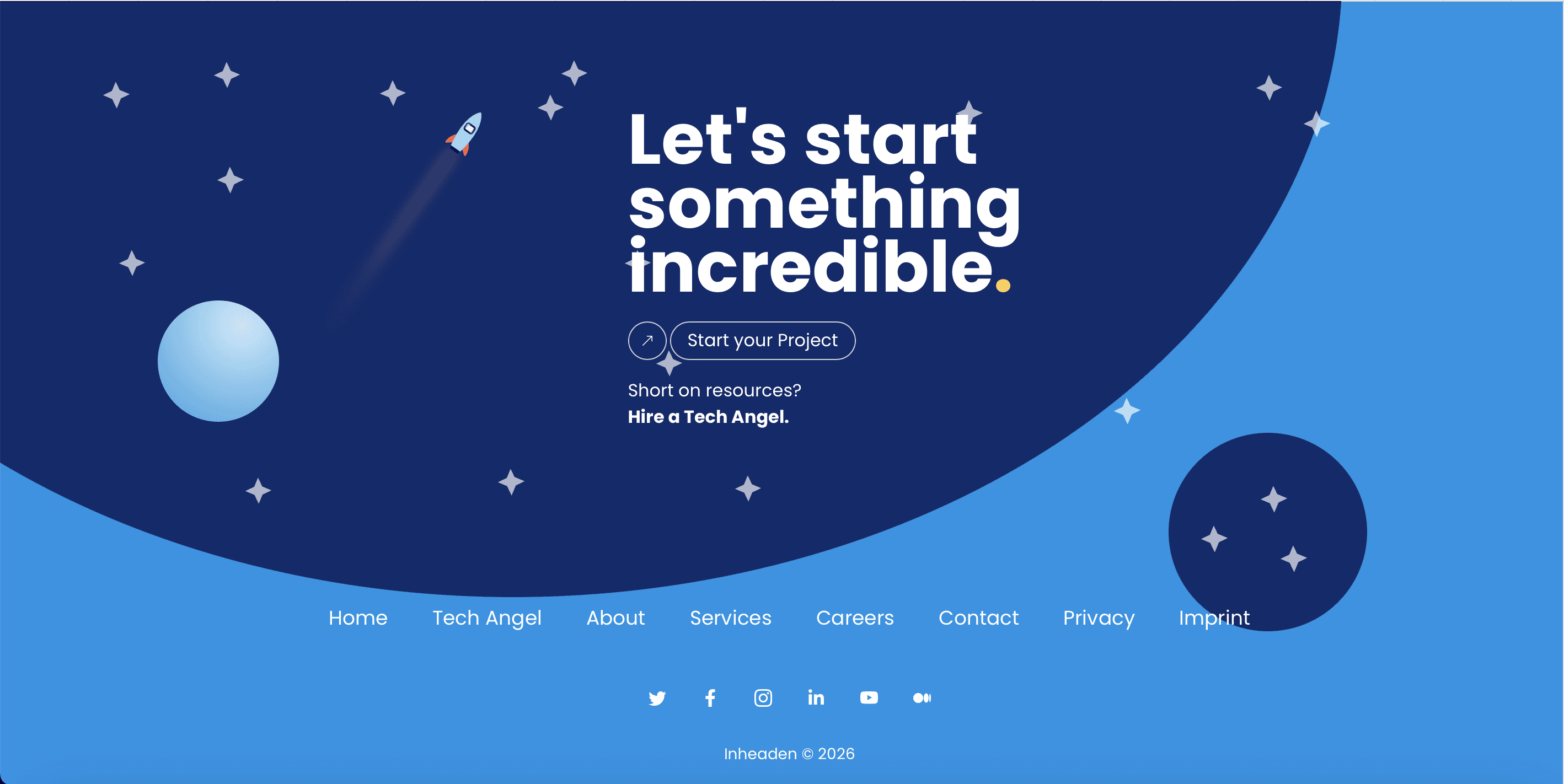
Before
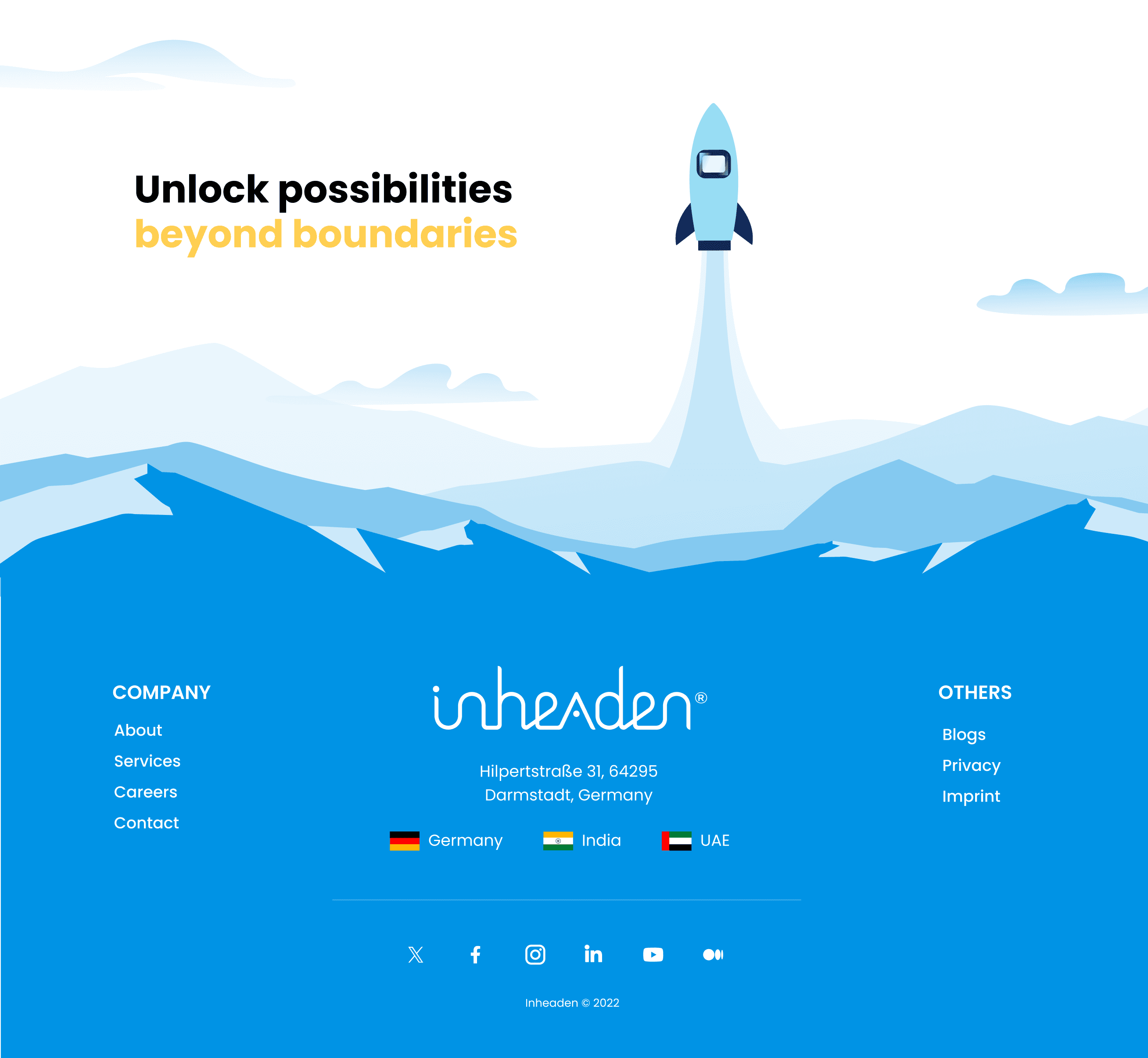
After
Preview the project
At development stage
See project
Impact
While the product is currently in development, the redesigned experience is expected to improve clarity, reduce early drop-offs, and increase qualified inbound inquiries. By introducing a structured conversion flow, clearer service positioning, and stronger trust signals, the design enables users to move from understanding to action with greater confidence.
Key learnings
A website is not a visual asset — it’s a business tool
Clarity drives conversion more than aesthetics
Good UX reduces decision fatigue
Designing for intent is more powerful than designing for interaction