Creating a procurement platform for AEC industry 🏗️
Creating a procurement platform for AEC industry 🏗️
Creating a procurement platform for AEC industry 🏗️
AEC = Architecture, Engineering, Construction
AEC = Architecture, Engineering, Construction
AEC = Architecture, Engineering, Construction

My Role
UI/UX Designer
Timeline
10 weeks
Tools
Figma, Miro, Photoshop
Responsibilities
UX Research
Product strategy
User flows
UI design
Design system
Problem statement
Procurement in the Architecture, Engineering, and Construction (AEC) industry is largely manual and fragmented, with teams relying on spreadsheets, emails, and disconnected vendor catalogs. This results in inefficient product discovery, limited cost visibility, and delays in procurement decisions. The lack of a centralized system makes it difficult for stakeholders to collaborate and manage procurement effectively across projects.
Goal
Design a procurement platform that simplifies how AEC professionals discover products, manage project procurement, and collaborate with stakeholders. The goal is to centralize procurement workflows and enable faster, more informed decision-making throughout the construction lifecycle.
Objective
Reduce product discovery time by 50%
Improve procurement visibility by 25%
Reduce stakeholder communication delays
Improve vendor comparison efficiency
Solution
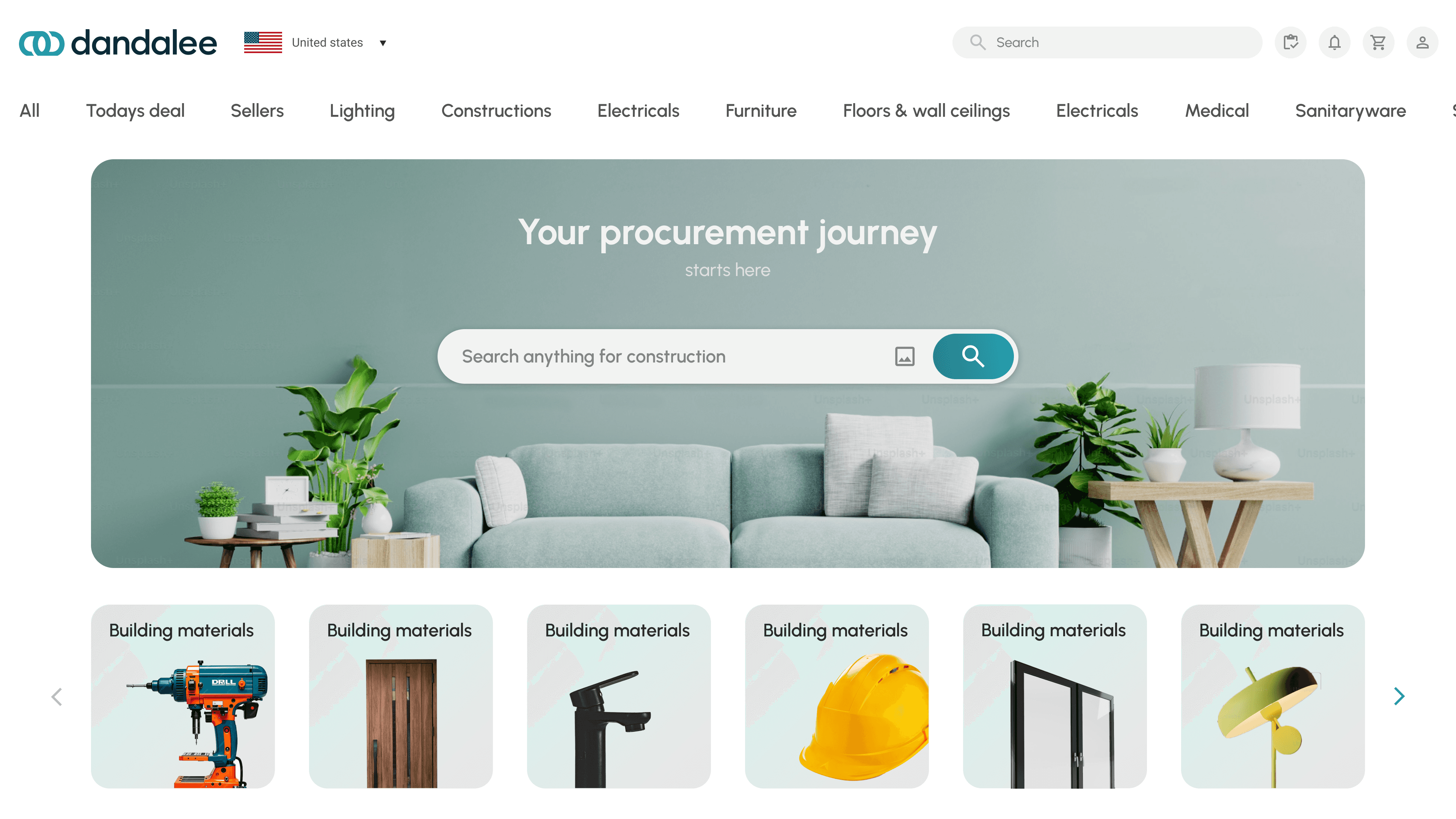
This video is made by Dandalee
Design approach
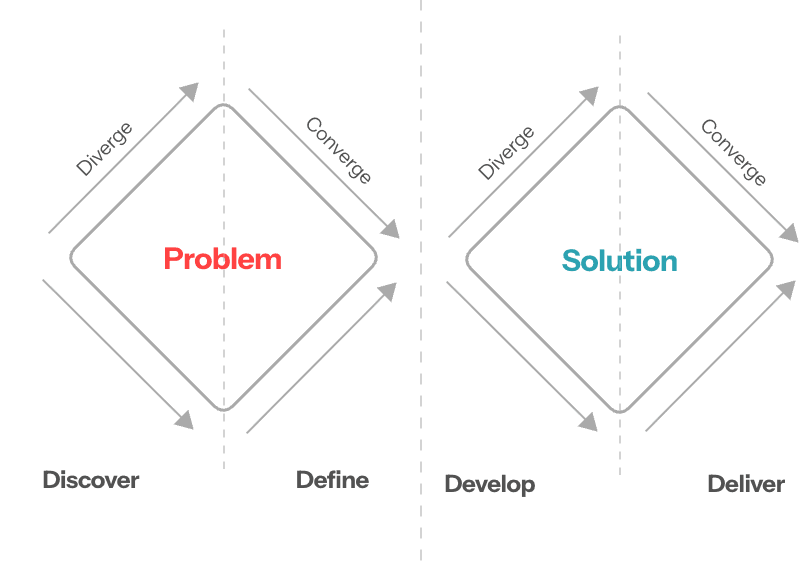
To solve this problem, I followed a Lean UX approach within the Double Diamond framework. The Double Diamond helped structure the process from problem discovery to solution delivery, while Lean UX enabled rapid ideation, prototyping, and iterative validation of design decisions.
What was given
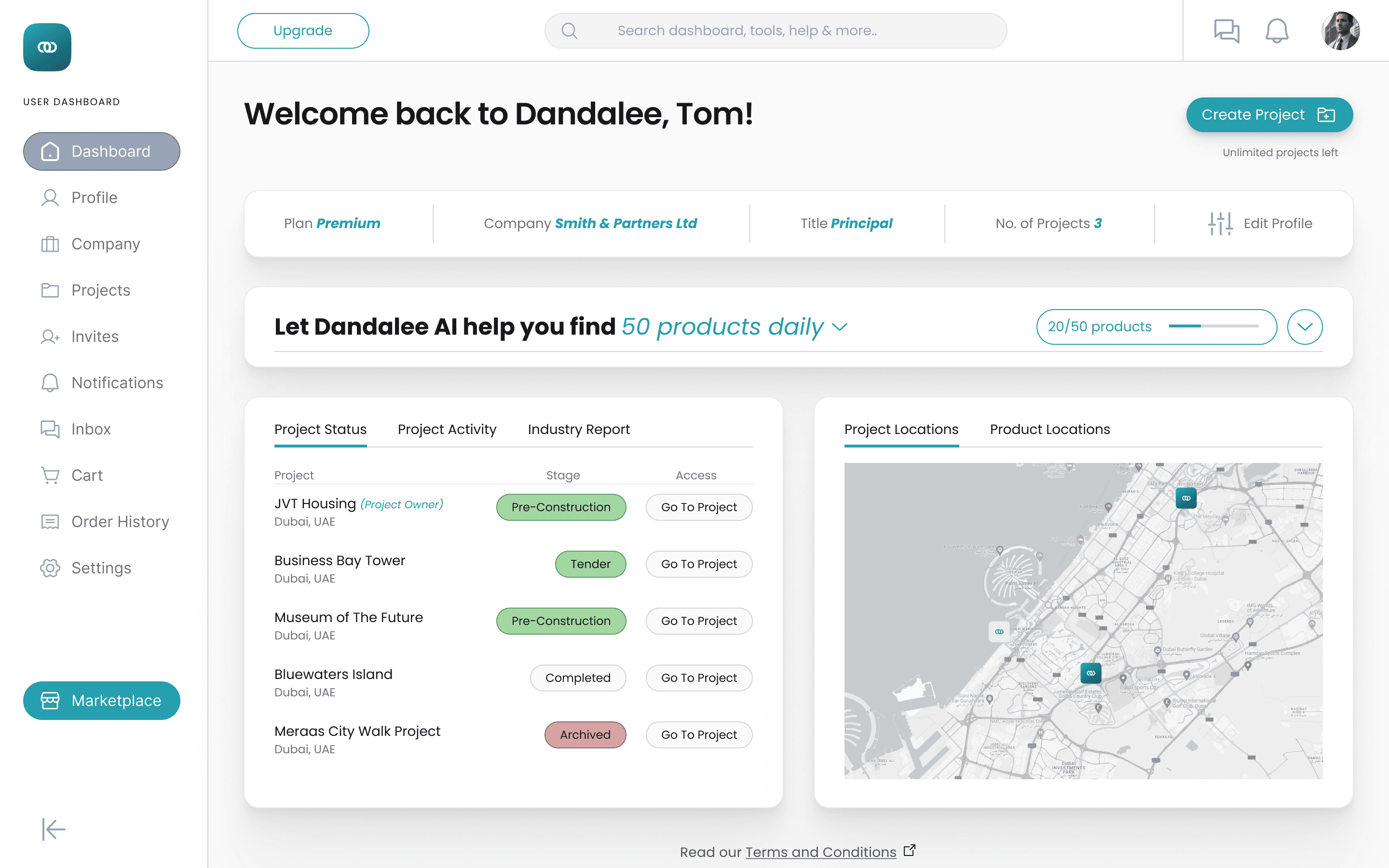
A few existing dashboard screens
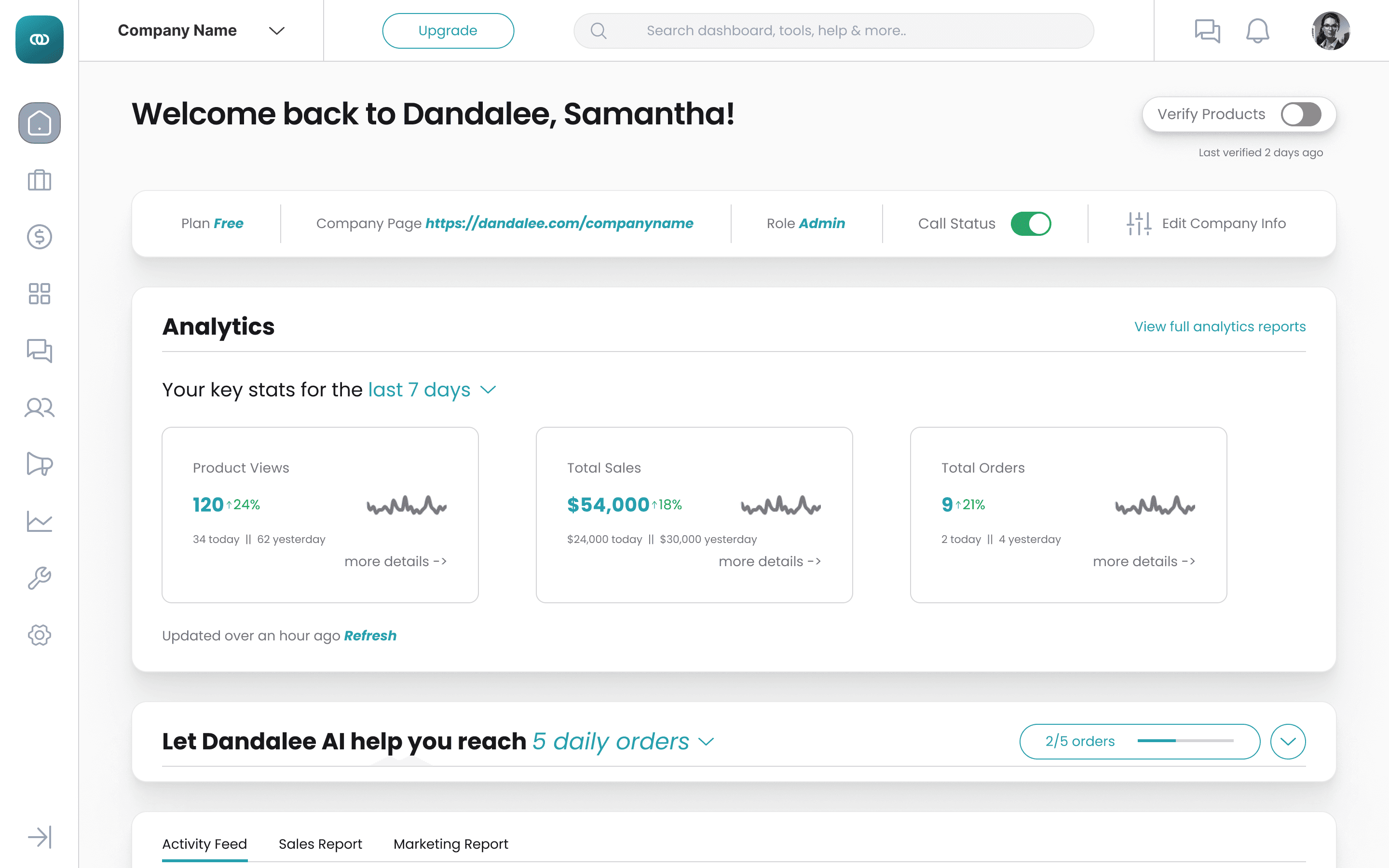
Product Taxonomy
A very long list was provided with categorization of products at multi level
Brand guideline
Eastern blue
#259FAE
Firefly
#0C2937
Iceberg
#DFF2F3
White
#FFFFFF
Greenish blue
#28808A
Eastern blue
#259FAE
Client wanted to stick to this color scheme as it was already there on their website and he was quite happy with it.
How I proceeded
First, I tried to understand the existing system architecture
Marketplace
Product database
AI recommendation
Dandalee platform
Buyer Dashboard
Create projects
Add products
Compare vendors
Procurement
Project Dashboard
Budget tracking
Stakeholders
Activity feed
Project reports
Seller Dashboard
Product listings
Sales Analytics
Order management
Company page
Then dived into Research
To understand the procurement challenges like how construction materials are sourced, evaluated and purchased by architects, engineers & clients
Constructuction procurement workflow
Specification
Vendor discovery
RFQ (Request For Quotation)
Product comparison
Ordering
Delivery tracking
User Personas based on different roles
To empathize with the users and understand their pain points and goals
Persona 1 – Architect

Name: Rohan Sharma
Age: 34
Role: Senior Architect
Experience: 9 years
Firm Size: Mid-size architecture studio
Goals
Quickly find construction products that match
design specifications
Compare vendors and product options efficiently
Ensure material selections stay within project
budget
Maintain transparency with contractors and
project stakeholders
Pain Points
Product catalogs and supplier information are
scattered across multiple sources
Comparing vendor quotations through emails and spreadsheets is time-consuming
Lack of a centralized system to track procurement status and budgets
Frequent back-and-forth communication with
contractors slows decision making
Motivation
Rohan wants to spend less time on procurement research and more time on design work, while still ensuring that materials meet both aesthetic and budget requirements.
Key insights
Procurement delays contribute to nearly 20-30% of project schedule overruns, often due to slow vendor coordination and late material approvals.
Architects and project managers spend 6-10 hours per week searching for product specifications and vendor information, largely across fragmented platforms and supplier websites.
Vendor discovery is highly decentralized, with most professionals relying on personal networks, offline catalogs, or scattered online resources.
Product comparison is often conducted using manual spreadsheets, making it difficult to evaluate specifications, pricing, and availability in a standized format.
Procurement decisions require multiple stakeholder approvals, which can slow down decision-making and introduce communication delays.
Key UX problems identified
I analyzed the existing procurement workflow in AEC projects, where multiple stakeholders rely on fragmented vendor data and manual processes.
No centralized view of Project health
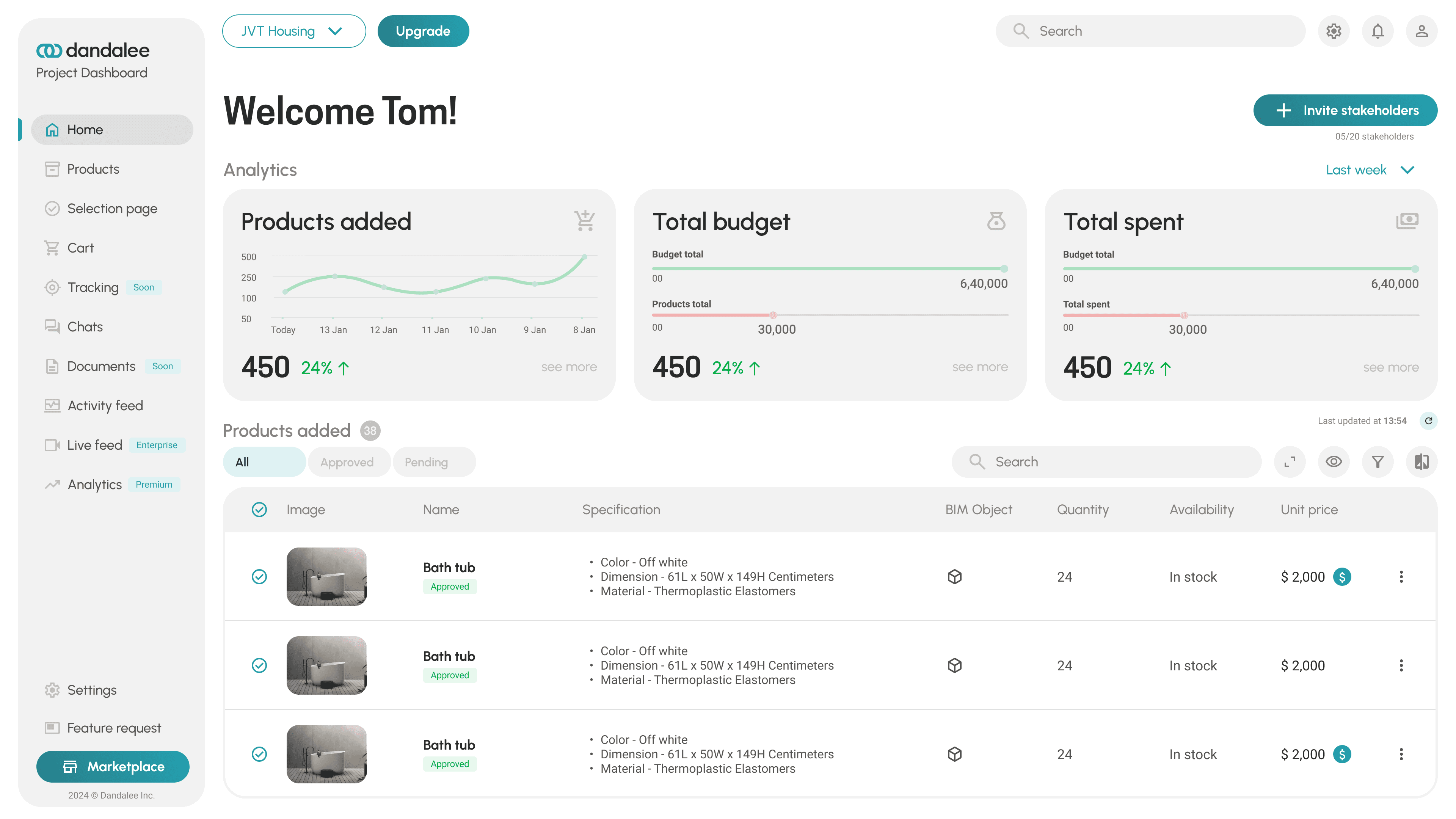
Problem:
Users had no single place to track budget, progress, and procurement status
Solution:
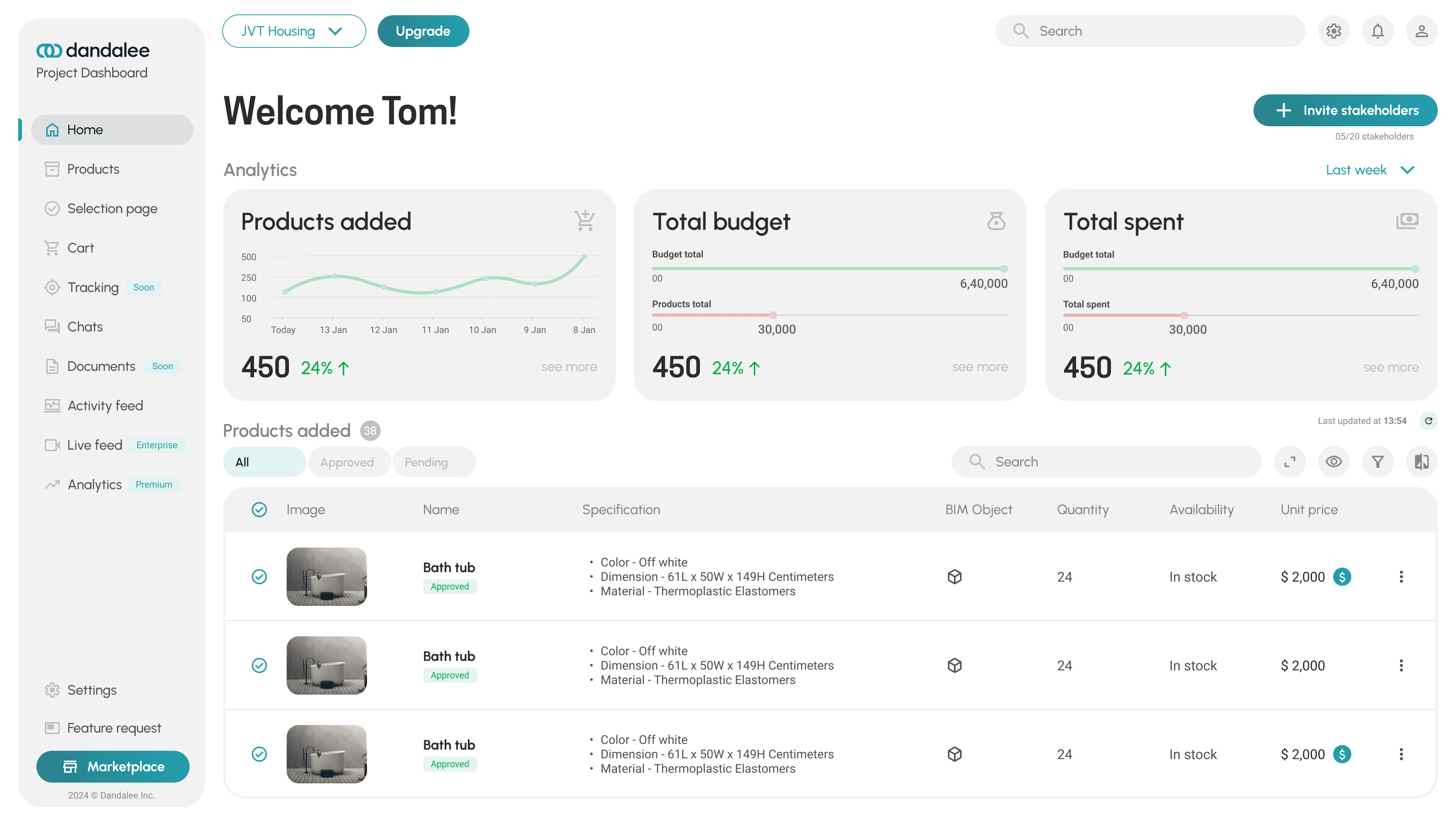
I designed the project dashboard that centralizes procurement and highlighted key features like budget overview, add products, procurement progress,etc.
Impact:
Faster decision making
Reduced dependency on spreadsheets
Improved project visibility
UI decisions & constraints
Developing global search bar was time consuming, so I had to add two search bars
Showed "products added" in table as its is easier to see a long list of 100/1000s of products in a structured way which is easy to scan
Highlighted budget & products in cards as these are the most important information
Constraint
UI decisions & constraints


My Role
My Role
UI/UX Designer
UI/UX Designer
Timeline
Timeline
10 weeks
10 weeks
Tools
Tools
Figma, Miro, Photoshop
Figma, Miro, Photoshop
Responsibilities
Responsibilities
UX Research
UX Research
Product strategy
Product strategy
User flows
User flows
UI design
UI design
Design system
Design system
Problem statement
Problem statement
Procurement in the Architecture, Engineering, and Construction (AEC) industry is largely manual and fragmented, with teams relying on spreadsheets, emails, and disconnected vendor catalogs. This results in inefficient product discovery, limited cost visibility, and delays in procurement decisions. The lack of a centralized system makes it difficult for stakeholders to collaborate and manage procurement effectively across projects.
Procurement in the Architecture, Engineering, and Construction (AEC) industry is largely manual and fragmented, with teams relying on spreadsheets, emails, and disconnected vendor catalogs. This results in inefficient product discovery, limited cost visibility, and delays in procurement decisions. The lack of a centralized system makes it difficult for stakeholders to collaborate and manage procurement effectively across projects.
Goal
Goal
Design a procurement platform that simplifies how AEC professionals discover products, manage project procurement, and collaborate with stakeholders. The goal is to centralize procurement workflows and enable faster, more informed decision-making throughout the construction lifecycle.
Design a procurement platform that simplifies how AEC professionals discover products, manage project procurement, and collaborate with stakeholders. The goal is to centralize procurement workflows and enable faster, more informed decision-making throughout the construction lifecycle.
Objective
Objective
Reduce product discovery time by 50%
Improve procurement visibility by 25%
Reduce stakeholder communication delays
Improve vendor comparison efficiency
Reduce product discovery time by 50%
Improve procurement visibility by 25%
Reduce stakeholder communication delays
Improve vendor comparison efficiency
Solution
Solution
This video is made by Dandalee
This video is made by Dandalee
Design approach
Design approach
To solve this problem, I followed a Lean UX approach within the Double Diamond framework. The Double Diamond helped structure the process from problem discovery to solution delivery, while Lean UX enabled rapid ideation, prototyping, and iterative validation of design decisions.
To solve this problem, I followed a Lean UX approach within the Double Diamond framework. The Double Diamond helped structure the process from problem discovery to solution delivery, while Lean UX enabled rapid ideation, prototyping, and iterative validation of design decisions.
What was given
What was given
A few existing dashboard screens
A few existing dashboard screens
Product Taxonomy
Product Taxonomy
A very long list was provided with categorization of products at multi level
A very long list was provided with categorization of products at multi level
Brand guideline
Brand guideline
Eastern blue
Eastern blue
#259FAE
#259FAE
Iceberg
Iceberg
#DFF2F3
#DFF2F3
Firefly
Firefly
#0C2937
#0C2937
White
White
#FFFFFF
#FFFFFF
Greenish blue
Greenish blue
#28808A
#28808A
Eastern blue
Eastern blue
#259FAE
#259FAE
Client wanted to stick to this color scheme as it was already there on their website and he was quite happy with it.
Client wanted to stick to this color scheme as it was already there on their website and he was quite happy with it.
How I proceeded
How I proceeded
First, I tried to understand the existing system architecture
First, I tried to understand the existing system architecture
Dandalee platform
Dandalee platform
Buyer Dashboard
Buyer Dashboard
Create projects
Create projects
Add products
Add products
Compare vendors
Compare vendors
Procurement
Procurement
Project Dashboard
Project Dashboard
Budget tracking
Budget tracking
Stakeholders
Stakeholders
Activity feed
Activity feed
Project reports
Project reports
Seller Dashboard
Seller Dashboard
Product listings
Product listings
Sales Analytics
Sales Analytics
Order management
Order management
Company page
Company page
Marketplace
Marketplace
Product database
Product database
AI recommendation
AI recommendation
Then dived into Research
Then dived into Research
To understand the procurement challenges like how construction materials are sourced, evaluated and purchased by architects, engineers & clients
To understand the procurement challenges like how construction materials are sourced, evaluated and purchased by architects, engineers & clients
Constructuction procurement workflow
Constructuction procurement workflow
Specification
Specification
Architects define product requirements including materials, dimensions, and compliance standards.
Architects define product requirements including materials, dimensions, and compliance standards.
Vendor discovery
Vendor discovery
Teams search for suppliers through catalogs, networks, or online directories.
Teams search for suppliers through catalogs, networks, or online directories.
RFQ (Request For Quotation)
RFQ (Request For Quotation)
Specification documents are sent to vendors to request pricing and availability.
Specification documents are sent to vendors to request pricing and availability.
Product comparison
Product comparison
Architects compare options based on price, specifications, certifications, and delivery timelines.
Architects compare options based on price, specifications, certifications, and delivery timelines.
Ordering
Ordering
Approved products are finalized and added to procurement orders.
Approved products are finalized and added to procurement orders.
Delivery tracking
Delivery tracking
Teams monitor shipment status and vendor updates to ensure timely delivery.
Teams monitor shipment status and vendor updates to ensure timely delivery.
User Personas based on different roles
User Personas based on different roles
To empathize with the users and understand their pain points and goals
To empathize with the users and understand their pain points and goals
Persona 1 – Architect
Persona 1 – Architect
Name: Rohan Sharma
Age: 34
Role: Senior Architect
Experience: 9 years
Firm Size: Mid-size architecture studio
Goals
Quickly find construction products that match
design specifications
Compare vendors and product options efficiently
Ensure material selections stay within project
budget
Maintain transparency with contractors and
project stakeholders
Pain Points
Product catalogs and supplier information are
scattered across multiple sources
Comparing vendor quotations through emails and spreadsheets is time-consuming
Lack of a centralized system to track procurement status and budgets
Frequent back-and-forth communication with
contractors slows decision making
Motivation
Rohan wants to spend less time on procurement research and more time on design work, while still ensuring that materials meet both aesthetic and budget requirements.
Name: Rohan Sharma
Age: 34
Role: Senior Architect
Experience: 9 years
Firm Size: Mid-size architecture studio
Goals
Quickly find construction products that match
design specifications
Compare vendors and product options efficiently
Ensure material selections stay within project
budget
Maintain transparency with contractors and
project stakeholders
Pain Points
Product catalogs and supplier information are
scattered across multiple sources
Comparing vendor quotations through emails and spreadsheets is time-consuming
Lack of a centralized system to track procurement status and budgets
Frequent back-and-forth communication with
contractors slows decision making
Motivation
Rohan wants to spend less time on procurement research and more time on design work, while still ensuring that materials meet both aesthetic and budget requirements.
Persona 2 – Contractor
Persona 2 – Contractor

Name: Mehul Patel
Age: 41
Role: Contractor
Experience: 15 years
Company Type: Construction contractor managing multiple projects
Goals
Track material orders and deliveries efficiently
Ensure procurement aligns with project schedules
Coordinate smoothly with architects and suppliers
Avoid delays caused by missing or late materials
Pain Points
Limited visibility into procurement decisions made by architects
Difficulty tracking which materials have been
ordered or delivered
Communication gaps between architects,
suppliers, and site teams
Delays caused by manual coordination and
scattered information
Motivation
Mehul wants a clear view of procurement progress so he can plan construction work without delays and ensure projects stay on schedule.
Name: Mehul Patel
Age: 41
Role: Contractor
Experience: 15 years
Company Type: Construction contractor managing multiple projects
Goals
Track material orders and deliveries efficiently
Ensure procurement aligns with project schedules
Coordinate smoothly with architects and suppliers
Avoid delays caused by missing or late materials
Pain Points
Limited visibility into procurement decisions made by architects
Difficulty tracking which materials have been
ordered or delivered
Communication gaps between architects,
suppliers, and site teams
Delays caused by manual coordination and
scattered information
Motivation
Mehul wants a clear view of procurement progress so he can plan construction work without delays and ensure projects stay on schedule.
User Journey (AEC procurement)
User Journey (AEC procurement)
I analyzed the existing procurement workflow in AEC projects, where multiple stakeholders rely on fragmented vendor data and manual processes.
I analyzed the existing procurement workflow in AEC projects, where multiple stakeholders rely on fragmented vendor data and manual processes.
Stages
Stages
Actions
Actions
Tools
Tools
Pain points
Pain points
Define project requirement
Define project requirement
Vendor discovery
Vendor discovery
RFQ (Request For Quotation)
RFQ (Request For Quotation)
Quotation Collection & Comparison
Quotation Collection & Comparison
Vendor Finalization
Vendor Finalization
Order Placement
Order Placement
Order Tracking
Order Tracking
Review architectural drawings and BOQ
Define material specifications (size, finish, compliance standards)
Estimate quantities
Review architectural drawings and BOQ
Define material specifications (size, finish, compliance standards)
Estimate quantities
Excel / BOQ sheets
PDFs of drawings
Internal documentation
Excel / BOQ sheets
PDFs of drawings
Internal documentation
Specifications stored across multiple files
Difficult to maintain version control
Limited visibility for procurement teams
Specifications stored across multiple files
Difficult to maintain version control
Limited visibility for procurement teams
Browse supplier websites or catalogs
Ask contractors or peers for recommendations
Search through vendor contacts or directories
Browse supplier websites or catalogs
Ask contractors or peers for recommendations
Search through vendor contacts or directories
Google search
WhatsApp groups
Vendor catalog PDFs
Trade contacts
Google search
WhatsApp groups
Vendor catalog PDFs
Trade contacts
Vendor information scattered across sources
Difficult to identify reliable suppliers
Time consuming vendor verification
Vendor information scattered across sources
Difficult to identify reliable suppliers
Time consuming vendor verification
Send material list to vendors
Clarify specifications over calls or emails
Request price quotes and timelines
Send material list to vendors
Clarify specifications over calls or emails
Request price quotes and timelines
Email
Phone calls
WhatsApp messages
Email
Phone calls
WhatsApp messages
RFQs sent manually to each vendor
Lack of standardized quotation format
Back-and-forth communication delays
RFQs sent manually to each vendor
Lack of standardized quotation format
Back-and-forth communication delays
Download vendor quotations
Enter pricing into spreadsheets
Compare price, delivery timelines, and quality
Download vendor quotations
Enter pricing into spreadsheets
Compare price, delivery timelines, and quality
Excel spreadsheets
Email attachments
PDF quotations
Excel spreadsheets
Email attachments
PDF quotations
Manual data entry
High chances of errors
Difficult to compare multiple vendors efficiently
Manual data entry
High chances of errors
Difficult to compare multiple vendors efficiently
Evaluate vendor credibility
Negotiate pricing or delivery
Confirm supplier
Evaluate vendor credibility
Negotiate pricing or delivery
Confirm supplier
Calls / meetings
Email approvals
Calls / meetings
Email approvals
Limited historical vendor performance data
Decision making based on fragmented information
Limited historical vendor performance data
Decision making based on fragmented information
Create purchase order document
Send confirmation to vendor
Align on delivery schedule
Create purchase order document
Send confirmation to vendor
Align on delivery schedule
Excel / ERP systems
Email
Excel / ERP systems
Email
Order documentation scattered across tools
Limited procurement visibility for stakeholders
Order documentation scattered across tools
Limited procurement visibility for stakeholders
Follow up with vendors for shipment updates
Coordinate with site teams
Confirm delivery status
Follow up with vendors for shipment updates
Coordinate with site teams
Confirm delivery status
Phone calls
WhatsApp
Emails
Phone calls
WhatsApp
Emails
No centralized tracking
Frequent follow-ups required
Delivery delays not visible early
No centralized tracking
Frequent follow-ups required
Delivery delays not visible early
Key insights
Key insights
Procurement delays contribute to nearly 20-30% of project schedule overruns, often due to slow vendor coordination and late material approvals.
Architects and project managers spend 6-10 hours per week searching for product specifications and vendor information, largely across fragmented platforms and supplier websites.
Vendor discovery is highly decentralized, with most professionals relying on personal networks, offline catalogs, or scattered online resources.
Product comparison is often conducted using manual spreadsheets, making it difficult to evaluate specifications, pricing, and availability in a standized format.
Procurement decisions require multiple stakeholder approvals, which can slow down decision-making and introduce communication delays.
Procurement delays contribute to nearly 20-30% of project schedule overruns, often due to slow vendor coordination and late material approvals.
Architects and project managers spend 6-10 hours per week searching for product specifications and vendor information, largely across fragmented platforms and supplier websites.
Vendor discovery is highly decentralized, with most professionals relying on personal networks, offline catalogs, or scattered online resources.
Product comparison is often conducted using manual spreadsheets, making it difficult to evaluate specifications, pricing, and availability in a standized format.
Procurement decisions require multiple stakeholder approvals, which can slow down decision-making and introduce communication delays.
Project dashboard user flow
Project dashboard user flow
I explored how users could navigate procurement tasks within project dashboard, including product addition, budget tracking, and stakeholder coordination, etc.
I explored how users could navigate procurement tasks within project dashboard, including product addition, budget tracking, and stakeholder coordination, etc.
Project dashboard
Project dashboard
My account
My account
Projects
Projects
Analytics
Analytics
Project 1
Project 1
Project wise
Total budget
spent
Remaining
Products added
Project wise
Total budget
spent
Remaining
Products added
Basic details of project:
Project name
Location
Building type (category, sub category or room)
Description
Basic details of project:
Project name
Location
Building type (category, sub category or room)
Description
See products required for this project
See products required for this project
Listed (All)
Bought
Need to buy
Listed (All)
Bought
Need to buy
See product list category wise
See product list category wise
Add to cart
Add to cart
RFQ
RFQ
Get quote from seller
Get quote from seller
Accept quote
Accept quote
Get new quote from seller
Get new quote from seller
Contract received from seller
Contract received from seller
Contract signed by buyer
Contract signed by buyer
Payment required
Payment required
Preauthorize for payment
Preauthorize for payment
Declined
Declined
Accepted
Accepted
Production started
Production started
Products ready
Products ready
Products approved by seller
Products approved by seller
Products delivered
Products delivered
Products approved by buyer
Products approved by buyer
Seller payment complete
Seller payment complete
Reject quote
Reject quote
gives counter quote
gives counter quote
Buy now
Buy now
See product details:
Quantity
Cost
Product type
Seller
See product details:
Quantity
Cost
Product type
Seller
Project 2
Project 2
Project 3
Project 3
Profile
Profile
Select wishlist/s
Select wishlist/s
Create doc
Create doc
Settings
Settings
Buy now
Buy now
Make payment
Make payment
Select payment mode
Select payment mode
Enter card details and save
Enter card details and save
Confirm payment
Confirm payment
Enter OTP
Enter OTP
Payment successful
Payment successful
Payment declined
Payment declined
Try again
Try again
Review order
Review order
Templates
Templates
Permissions
Permissions
Add member/s
Add member/s
Select roles:
Admin
Normal user
Select roles:
Admin
Normal user
Select access type:
View
Edit
Select access type:
View
Edit
Notifications
Notifications
Order history
Order history
Add details
Add details
Add project
Add project
Project ...n
Project ...n
Products
Products
Chat
Chat
Cart
Cart
Documents
Documents
End
End
Payout to seller
Payout to seller
Key UX problems identified
Key UX problems identified
I analyzed the existing procurement workflow in AEC projects, where multiple stakeholders rely on fragmented vendor data and manual processes.
I analyzed the existing procurement workflow in AEC projects, where multiple stakeholders rely on fragmented vendor data and manual processes.
No centralized view of Project health
No centralized view of Project health
Problem:
Users had no single place to track budget, progress, and procurement status
Problem:
Users had no single place to track budget, progress, and procurement status
Solution:
I designed the project dashboard that centralizes procurement and highlighted key features like budget overview, add products, procurement progress,etc.
Solution:
I designed the project dashboard that centralizes procurement and highlighted key features like budget overview, add products, procurement progress,etc.
Impact:
Faster decision making
Reduced dependency on spreadsheets
Improved project visibility
Impact:
Faster decision making
Reduced dependency on spreadsheets
Improved project visibility
UI decisions & constraints
UI decisions & constraints
Developing global search bar was time consuming, so I had to add two search bars
Developing global search bar was time consuming, so I had to add two search bars
Fullscreen preview to see more products at a time
Fullscreen preview to see more products at a time
Showed "products added" in table as its is easier to see a long list of 100/1000s of products in a structured way which is easy to scan
Showed "products added" in table as its is easier to see a long list of 100/1000s of products in a structured way which is easy to scan
Highlighted budget & products in cards as these are the most important information
Highlighted budget & products in cards as these are the most important information
Constraint
Constraint
UI decisions & constraints
UI decisions & constraints
Detailed report
Detailed report
User reach here by clicking the total spent card in homescreen
User reach here by clicking the total spent card in homescreen
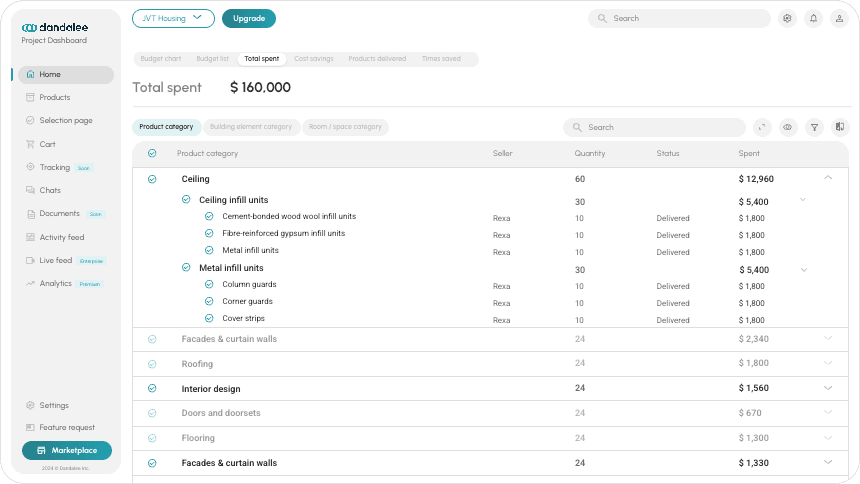
Product category can have 100s of products, hence added dropdown at sub level otherwise it could be too long & user would feel lost
Product category can have 100s of products, hence added dropdown at sub level otherwise it could be too long & user would feel lost
Quick filter by category
Quick filter by category
Different users see products in different category for calculations, hence added tabs
Different users see products in different category for calculations, hence added tabs
For any product first POC is marketplace only, hence added quick link access
For any product first POC is marketplace only, hence added quick link access
Faster access
Faster access
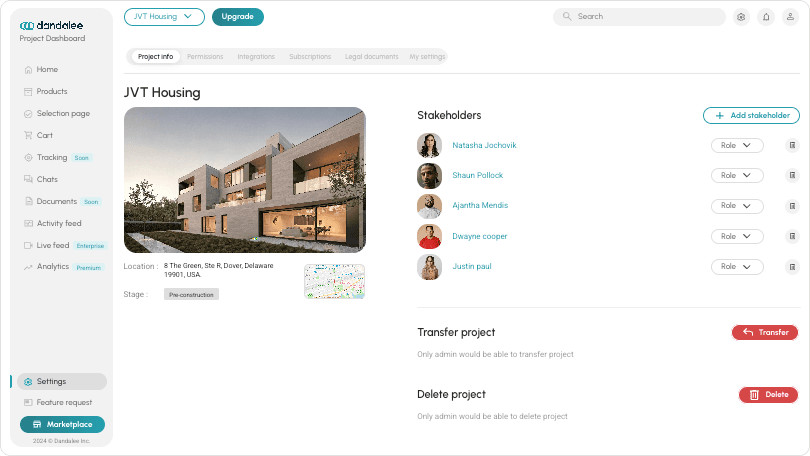
Adding stakeholders was fragmented
Adding stakeholders was fragmented
Problem:
Inviting and managing stakeholders was manual and unstructured.
Problem:
Inviting and managing stakeholders was manual and unstructured.
Solution:
Created a stakeholder management flow to invite users, assign roles, mange access, etc.
Solution:
Created a stakeholder management flow to invite users, assign roles, mange access, etc.
Impact:
Faster onboarding of stakeholders
Reduced communication gaps
Better accountability
Impact:
Faster onboarding of stakeholders
Reduced communication gaps
Better accountability
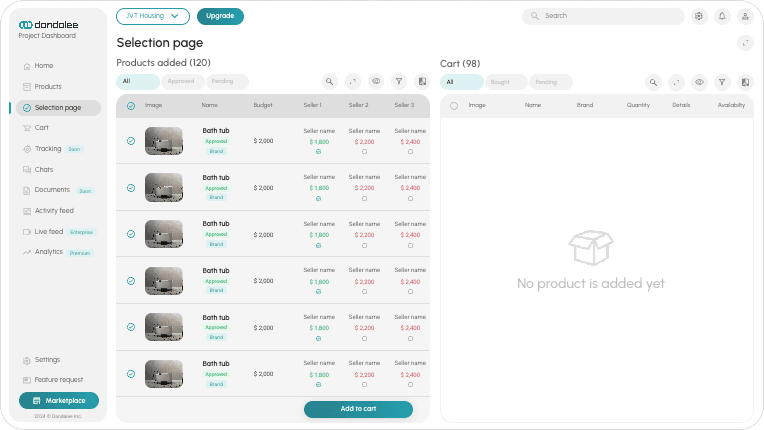
Product selection was complex
Product selection was complex
Problem:
Users struggled to select products due to large datasets and unclear structure
Problem:
Users struggled to select products due to large datasets and unclear structure
Solution:
Designed a structured selection page with categorized products in tabular format that is easy to scan.
Solution:
Designed a structured selection page with categorized products in tabular format that is easy to scan.
Impact:
Faster product selection
Reduced cognitive load
Better comparison experience
Impact:
Faster product selection
Reduced cognitive load
Better comparison experience
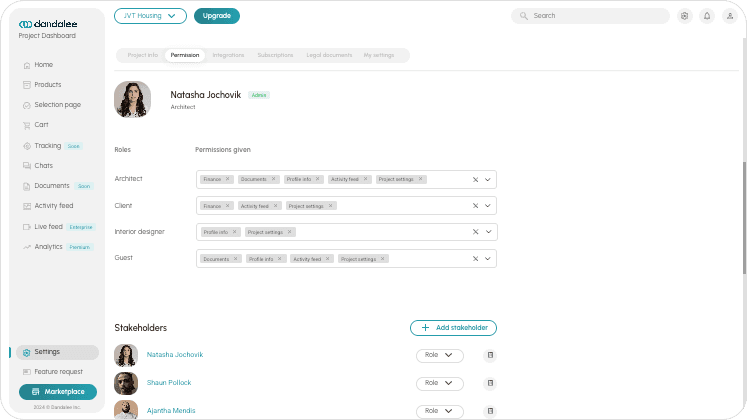
Lack of role-based access control
Lack of role-based access control
Problem:
All users had equal access, leading to confusion and errors.
Problem:
All users had equal access, leading to confusion and errors.
Solution:
DIntroduced permission-based access system:
Role-based visibility
Controlled actions
Solution:
DIntroduced permission-based access system:
Role-based visibility
Controlled actions
Impact:
Reduced errors in procurement actions
Improved security and clarity
Better collaboration structure
Impact:
Reduced errors in procurement actions
Improved security and clarity
Better collaboration structure
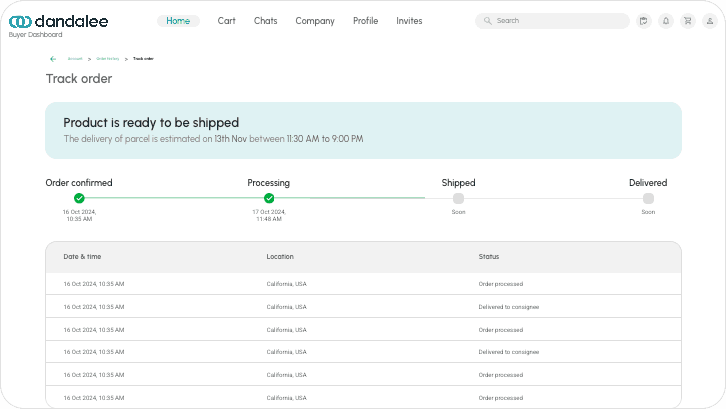
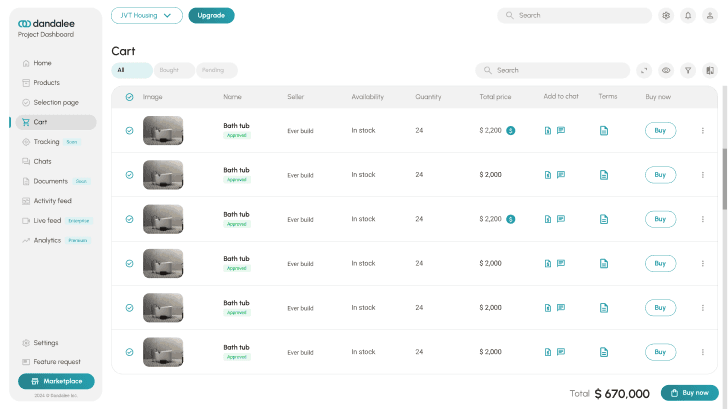
No clear procurement workflow
No clear procurement workflow
Problem:
Users didn't know the steps from selection > Purchase > Tracking
Problem:
Users didn't know the steps from selection > Purchase > Tracking
Solution:
Created a step by step procurement flow :
Selection
Cart
Order tracking
Solution:
Created a step by step procurement flow :
Selection
Cart
Order tracking
Impact:
Reduced confusion
Increased task completion rate
More predictable workflow
Impact:
Reduced confusion
Increased task completion rate
More predictable workflow
Failed Ideas
Multiple wishlists
Users could create several products wishlists as per their need
Failed because:
Created decision paralysis and it already had complicated procurement workflow
Real time notifications for every activity
Notify users for every product update, message, status change
Failed because:
Users would start ignoring alerts as there would be notification overload.
Auto suggested vendors for every product
System automatically recommends vendors for selected products
Failed because:
Users preferred manual control and there is lack of trust in recommendation
Mandatory RFQ flow for every product
Force users to request quotation before adding products to cart
Failed because:
Added friction to exploration and not all products required RFQ
Future Scope
AI based specification recommendation
Buy now pay later option
Vendor rating system
Auto RFQ generation
Better filter option
Impact we made
Reached 1.24 lakh monthly active users (MAU) just after launch
30-40% reduction in manual procurement effort
~25% faster decision making in product selection
Improved task completion rates for procurement workflows
Conclusion
This project focused on simplifying complex procurement workflows by centralizing product discovery, project management, and stakeholder collaboration into one platform. The solution improved efficiency, visibility, and coordination across users, reflected in strong adoption and engagement. It strengthened my ability to design scalable, system-driven products for complex environments.
Failed Ideas
Failed Ideas
Multiple wishlists
Multiple wishlists
Users could create several products wishlists as per their need
Users could create several products wishlists as per their need
Failed because:
Created decision paralysis and it already had complicated procurement workflow
Failed because:
Created decision paralysis and it already had complicated procurement workflow
Real time notifications for every activity
Real time notifications for every activity
Notify users for every product update, message, status change
Notify users for every product update, message, status change
Failed because:
Users would start ignoring alerts as there would be notification overload.
Failed because:
Users would start ignoring alerts as there would be notification overload.
Auto suggested vendors for every product
Auto suggested vendors for every product
System automatically recommends vendors for selected products
System automatically recommends vendors for selected products
Failed because:
Users preferred manual control and there is lack of trust in recommendation
Failed because:
Users preferred manual control and there is lack of trust in recommendation
Mandatory RFQ flow for every product
Mandatory RFQ flow for every product
Force users to request quotation before adding products to cart
Force users to request quotation before adding products to cart
Failed because:
Added friction to exploration and not all products required RFQ
Failed because:
Added friction to exploration and not all products required RFQ
Future Scope
Future Scope
AI based specification recommendation
Buy now pay later option
Vendor rating system
Auto RFQ generation
Better filter option
AI based specification recommendation
Buy now pay later option
Vendor rating system
Auto RFQ generation
Better filter option
Impact we made
Impact we made
Reached 1.24 lakh monthly active users (MAU) just after launch
30-40% reduction in manual procurement effort
~25% faster decision making in product selection
Improved task completion rates for procurement workflows
Reached 1.24 lakh monthly active users (MAU) just after launch
30-40% reduction in manual procurement effort
~25% faster decision making in product selection
Improved task completion rates for procurement workflows
Conclusion
This project focused on simplifying complex procurement workflows by centralizing product discovery, project management, and stakeholder collaboration into one platform. The solution improved efficiency, visibility, and coordination across users, reflected in strong adoption and engagement. It strengthened my ability to design scalable, system-driven products for complex environments.
Conclusion
This project focused on simplifying complex procurement workflows by centralizing product discovery, project management, and stakeholder collaboration into one platform. The solution improved efficiency, visibility, and coordination across users, reflected in strong adoption and engagement. It strengthened my ability to design scalable, system-driven products for complex environments.

Let's build together

Let's build together
That makes real impact
@Portfolio Design